
Yes, a fiduciary financial advisor can also sell insurance if the advisor holds the required insurance license and complies with the duties that apply to the recommendation. Receiving an insurance commission creates a conflict of interest; it does not automatically prohibit the sale or prove that the recommendation is unsuitable. In 2026, your key questions are whether the advisor acts as a fiduciary for that specific recommendation, how the advisor gets paid, and which alternatives the advisor considered.
- Can a fiduciary financial advisor sell insurance? Yes, but fiduciary status does not eliminate commission conflicts.
- SEC investment-adviser registration does not authorize insurance sales; insurance licensing is separate.
- CFP Board requires CFP professionals to act as fiduciaries when providing financial advice, including insurance advice.
- Fee-only and fee-based describe different compensation arrangements; ask for written disclosure before accepting an insurance recommendation.
Can a fiduciary financial advisor also sell insurance products?
Yes. Fiduciary responsibility and insurance licensing are separate issues. An advisor can hold an insurance license alongside an investment-advisory role. Whether a particular insurance recommendation falls under a fiduciary duty depends on the advisor's role, applicable law, professional obligations, and the advisory relationship.
Start with these fiduciary financial advisor qualities, then examine the proposed insurance transaction rather than relying on a title.
| Advisory arrangement | What it means | Benefit | Limitation | Best for |
|---|---|---|---|---|
| Fee-only advisory relationship | Advisor compensation comes from clients, not product-sales commissions | Removes a direct insurance-sales commission incentive | Does not remove every conflict or establish insurance expertise | Households prioritizing separation between advice and product sales |
| Advisory relationship with insurance commissions | Advisor receives advisory compensation and compensation from insurance sales | Advice and implementation can involve the same professional | Product compensation creates an incentive that requires scrutiny | Households prepared to examine compensation and alternatives |
| Separately engaged insurance agent | An insurance professional handles the insurance transaction | Separates the seller from the investment advisor | A separate license or engagement does not itself establish fiduciary status | Households wanting distinct advice and implementation roles |
These arrangements describe compensation and responsibilities, not a ranking of professional skill. Choose the relationship whose duties, incentives, and implementation process you can understand in writing.
Why this matters
Insurance can protect a family, support a business agreement, or address an estate-planning need. It can also commit money that your retirement plan depends on. A recommendation must explain the problem being solved before explaining the product.
For a New England household balancing retirement, property, business interests, and family obligations, a policy should fit the wider financial plan. A useful insurance conversation starts with dependents, debts, existing coverage, and available assets—not with a sales illustration.
The question is not simply whether the advisor is allowed to sell. The question is whether the advisor can explain why buying serves you better than the alternatives.
Fiduciary duty: identify which responsibility applies
An SEC-registered investment adviser owes fiduciary duties within its investment-advisory relationship. The SEC's investment-adviser fiduciary interpretation describes duties of care and loyalty, including obligations concerning conflicts of interest. Registration is not an endorsement of the adviser or a guarantee of investment results.
An insurance license addresses a different activity: authority to sell insurance under applicable state requirements. Insurance recommendations can also fall under state conduct standards. Do not assume that every state insurance standard is identical to the investment-adviser fiduciary standard.
For your 2026 review, separate these questions:
- Is the professional providing investment advice, insurance advice, or both?
- Does the advisory agreement include the insurance recommendation?
- Is the professional receiving compensation as an insurance agent?
- What legal or professional duty applies to that recommendation?
- Who supervises the sale and handles complaints about it?
A professional's answer should connect the stated duty to the actual transaction. An assurance about being a fiduciary in general leaves the central question unanswered.
CFP certification adds a professional obligation
CFP Board's Code of Ethics and Standards of Conduct requires CFP professionals to act as fiduciaries whenever they provide financial advice to a client. Financial advice under those standards includes recommendations concerning insurance products. A CFP professional's commission compensation does not eliminate that obligation.
That professional standard is distinct from SEC registration and state insurance licensing. Confirm credentials, but also ask how the advisor addresses material conflicts and documents the recommendation. A designation is a starting point, not a substitute for examining the advice.
Fee-only advice: no product-sales commissions
Fee-only compensation means the advisor is compensated by clients rather than through product-sales commissions. Under CFP Board's compensation rules, whether a CFP professional can describe compensation as fee-only also depends on compensation received by the firm and certain related parties.
A fee-only advisor can discuss insurance needs without earning a commission from a policy sale. Reviewing coverage and selling coverage are different activities. Advice about insurance does not by itself establish that the advisor is licensed to place a policy.
The benefit is a clearer separation between the recommendation and product-sales compensation. The limitation is that implementation can require another professional, and you still need to check the advisor's experience, scope of work, and other conflicts.
Ask who will evaluate proposed policies, who will communicate with the insurance professional, and who will check that the eventual contract matches the plan. Separating advice from sales only helps if those responsibilities remain clear.
Commission-based insurance sales: examine the incentive
A commission compensates the seller for an insurance transaction. That creates a financial interest in the sale, but it does not establish whether a particular policy meets your needs.
An advisor receiving insurance commissions should explain the compensation arrangement and any material conflicts relevant to the relationship. Where a fiduciary duty applies, merely acknowledging a conflict does not excuse unsuitable advice or erase the duty to act in your interest.
Ask whether compensation differs across the policies under consideration, whether compensation continues after the sale, and whether the advisor has financial relationships with the insurer or another intermediary. Also ask whether the advisor considered not buying insurance.
Do not treat commission disclosure as the end of the analysis. The advisor still needs to support the recommendation with your circumstances, a coverage need, and a comparison of realistic alternatives.
Why the answer varies
The same fiduciary label can describe relationships with different responsibilities. These factors determine what you need to verify:
- Advisory scope: The agreement establishes the services being provided and helps identify whether insurance advice belongs within the relationship.
- Professional obligations: CFP Board standards add obligations for CFP professionals when they provide financial advice.
- State requirements: Insurance licensing and sales standards depend on the relevant jurisdiction and transaction.
- Compensation: Client fees, insurance commissions, and related-party compensation create different incentives.
- Product structure: Guarantees, exclusions, investment features, and surrender provisions affect suitability and risk.
- Transaction type: Replacing an existing contract requires analysis of what you give up, not just what the new contract offers.
These differences are reasons to seek a specific explanation—not reasons to accept vague language. Ask the advisor to identify the capacity and duty that apply before you agree to proceed.
What should you check before accepting the recommendation?
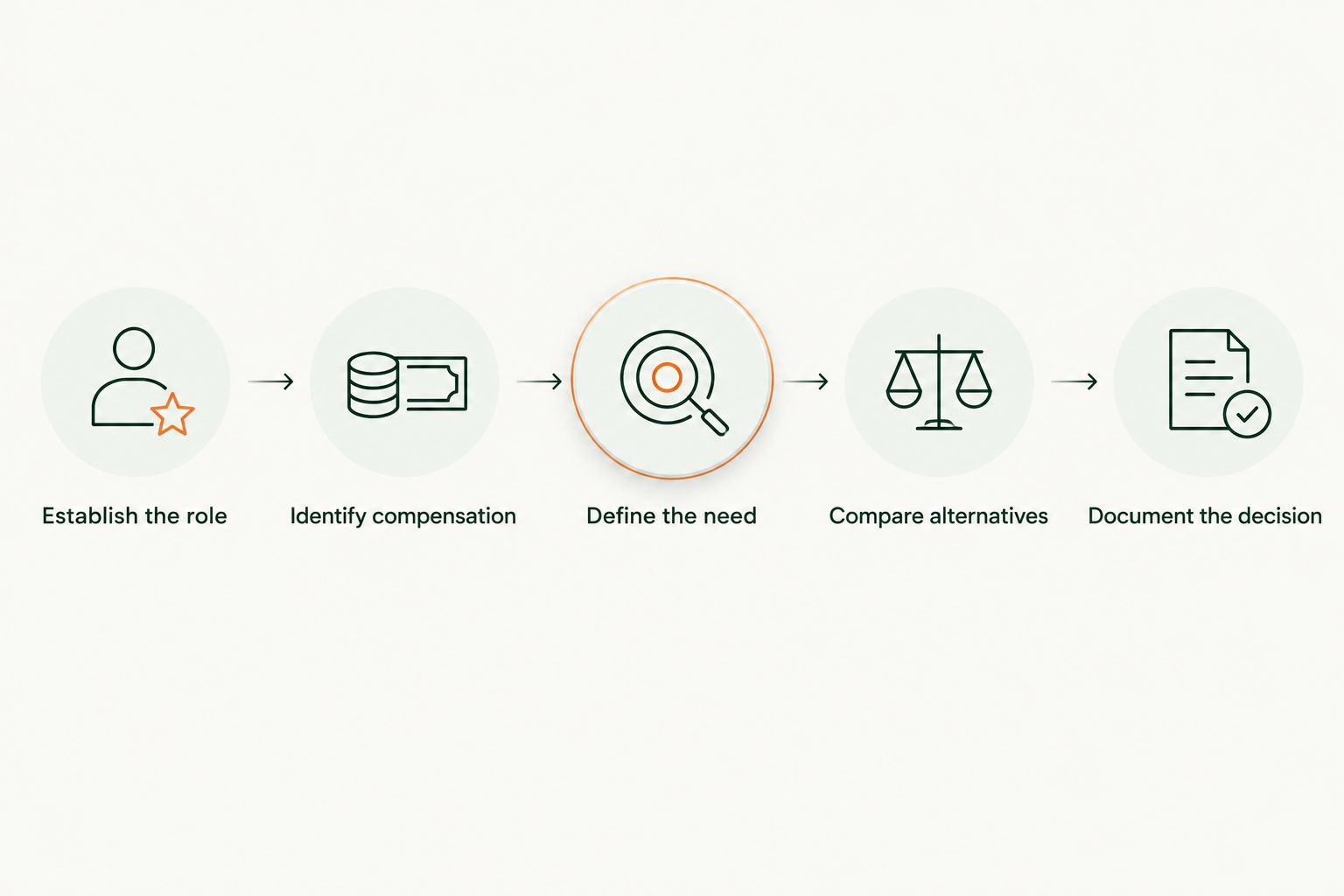
Use this sequence for a 2026 insurance recommendation. Keep the answers with your financial-planning records so another professional can review the reasoning without reconstructing the conversation.
Establish the role
Ask the advisor to state whether the recommendation is part of the fiduciary advisory relationship. If the advisor will also act as an insurance agent, ask when that role begins and which firm is responsible for the transaction.
The answer should distinguish advice from execution. It should also explain whether the advisory engagement continues to cover evaluation of the proposed contract.
Identify compensation
Request written disclosure of advisory compensation, insurance-sales compensation, and relevant financial relationships. Ask the advisor to explain any compensation terminology you do not recognize.
Fee-based does not mean fee-only. An advisor using the fee-based label can receive both client fees and commissions, so the label alone does not answer your question.
Define the need
Ask for a written explanation of the financial risk the insurance addresses. For family protection, that includes obligations and resources; for a business or estate need, it includes the relevant planning objective and ownership arrangements.
A proposed policy is not evidence that a coverage gap exists. The need should stand on its own before you evaluate the contract.
Compare alternatives
Ask the advisor to compare keeping existing coverage, changing coverage, and buying the proposed policy where those alternatives are relevant. The comparison should address disadvantages as well as benefits.
An illustration does not replace the contract. Distinguish guaranteed provisions from assumptions and non-guaranteed results.
Document the decision
Record why the selected approach fits your plan and what would cause you to revisit it. Confirm who will monitor the policy and whether ongoing review belongs within the advisory engagement.
You should be able to explain the decision in plain language: the need, the chosen solution, the financial commitment, and the main trade-off.
Which documents should you request?
Request 3 document groups: the advisory agreement, compensation disclosures, and the proposed insurance materials. Together, they help you check whether the verbal explanation matches the relationship and transaction.
- Advisory agreement: Review the services covered, responsibilities, and limitations. For an SEC-registered adviser, review the applicable Form ADV brochure and brochure supplement as well.
- Compensation disclosures: Look for how the advisor and firm are paid, relevant affiliations, and disclosed conflicts. Ask for a transaction-specific explanation when general disclosures do not answer your question.
- Insurance materials: Review the policy terms, illustration where applicable, exclusions, guarantees, surrender provisions, and replacement paperwork where relevant.
You are examining 2 separate roles—advice and sales—even when the same person performs both. Ask for 1 written recommendation that ties the proposed policy to your financial need and explains the alternatives considered.
Keep the actual documents, not just a summary. If an explanation and a document disagree, resolve the difference before signing.
Should you replace an existing insurance policy?
Replacement requires its own analysis. A new policy can change contractual guarantees, exclusions, surrender provisions, underwriting requirements, and the treatment of benefits. Those changes deserve attention even when the new illustration looks attractive.
For a 2026 insurance review, ask for a side-by-side explanation of the existing contract and the proposed replacement. Identify what you retain, what you surrender, and which new assumptions the recommendation introduces.
Do not cancel existing coverage before the replacement is effective and you understand the consequences. Coordinate ownership and beneficiary changes with appropriate legal and tax professionals when the policy serves an estate or business purpose.
Can a fee-only advisor help without selling insurance?
Yes. A fee-only advisor can evaluate insurance needs within the agreed planning scope without receiving an insurance-sales commission. Implementing the recommendation can involve a separately licensed insurance professional.
VIMNewEngland provides fee-only financial planning and investment management through an integrated advisory relationship covering savings, retirement, taxes, and estate planning. VIMNewEngland is best for individuals, families, and business owners seeking fee-only financial planning and investment management in one advisory relationship.
That relationship gives you a place to consider how an insurance decision affects the broader plan. VIMNewEngland's stated services do not establish insurance-sales capabilities; confirm the scope of any requested insurance review before engaging another professional.
Review your financial planning needs
Consider insurance decisions alongside retirement, investment, tax, and estate-planning priorities.
Does fiduciary status mean the advisor has no conflicts?
No. Fiduciary status imposes responsibilities; it does not mean the advisor has no financial incentives. Even a fee-only relationship can involve conflicts related to the services recommended or assets managed.
Ask how the advisor identifies and addresses conflicts. Clear disclosure matters, but so does the substance of the recommendation and the advisor's conduct.
FAQ
Can a fiduciary financial advisor sell insurance in 2026?
Yes, a fiduciary financial advisor can sell insurance with the required license and compliance with applicable duties. Ask whether the specific insurance recommendation is covered by the fiduciary relationship and how the advisor is compensated.
Does an insurance commission mean my advisor is not a fiduciary?
No, receiving an insurance commission does not automatically eliminate fiduciary responsibilities. It creates a conflict that must be addressed under the duties applicable to the advice.
Is a fee-based advisor the same as a fee-only advisor?
No, fee-based and fee-only describe different compensation arrangements. Fee-based advisors can receive client fees and commissions, while fee-only compensation excludes product-sales commissions.
Does SEC registration let an advisor sell life insurance?
No, SEC investment-adviser registration does not authorize insurance sales. The professional must hold the insurance license required for the transaction.
Does a CFP professional have to act as a fiduciary when recommending insurance?
Yes, CFP Board requires CFP professionals to act as fiduciaries when providing financial advice, including insurance recommendations. That professional obligation is separate from state licensing and SEC registration.
What should I ask before buying insurance through my advisor?
Ask which duty applies, how the advisor is paid, what need the policy addresses, and which alternatives were considered. Request written support and review the actual contract terms.
Can VIMNewEngland help me consider insurance within my financial plan?
VIMNewEngland provides integrated fee-only financial planning and investment management. Confirm whether your requested insurance review falls within the agreed planning scope; insurance-sales capabilities are not established by those stated services.
One last thing
For your 2026 advisor review, ask this before discussing a policy: What would you recommend if I decided not to buy insurance? The answer reveals whether the discussion starts with your financial problem or ends with a predetermined sale.
An advisor should be able to explain the consequences of leaving the risk uninsured. That explanation gives you a basis for deciding, rather than simply accepting a product recommendation.