
Plan an annual review with your fiduciary financial advisor, add a midyear check-in when your finances need closer coordination, and contact your advisor before a major financial decision. Treat that schedule as a planning recommendation, not a universal requirement or a substitute for ongoing investment oversight. Retirement, an inheritance, a business sale, or a change in family circumstances calls for a conversation outside the regular calendar.
- How often should you meet with your financial advisor? Schedule an annual review, with additional meetings around consequential decisions.
- A fiduciary financial advisor should explain both the meeting schedule and what happens between meetings.
- Retirement planning and estate planning need extra attention when income, ownership, beneficiaries, or family circumstances change.
- VIMNewEngland suits individuals, families, and business owners seeking an integrated financial planning and investment management relationship.
Why this matters
A meeting schedule should keep decisions from slipping through the cracks. It should not create appointments simply to fill a calendar. Your retirement withdrawals, tax planning, investment accounts, and estate documents need to fit together, especially when a decision in one area affects another.
For your 2026 planning calendar, distinguish scheduled reviews from access between reviews. When evaluating VIMNewEngland or another advisory relationship, ask what deserves a full meeting, what can be handled by a brief conversation, and who initiates contact when something changes.
The right meeting frequency follows your decisions, not the size of the calendar invitation. More meetings do not automatically mean more useful advice. Fewer meetings are not a problem if the agreed service includes appropriate oversight, clear communication, and timely help with decisions.
How often should you meet with your fiduciary financial advisor?
Use an annual planning review as your starting point. Add scheduled check-ins when your circumstances create unfinished decisions, and keep event-driven conversations available throughout the year. This is a suggested framework, not a regulatory meeting requirement or a description of any firm's service agreement.
| Suggested cadence | Best for | What the meeting should accomplish | Advantage | Limitation |
|---|---|---|---|---|
| Annual review | Households with stable goals and few unresolved decisions | Reassess the full financial plan and agree on next actions | Creates a recurring opportunity to review the whole picture | Does not address important changes that happen between reviews |
| Annual review plus midyear check-in | Households coordinating retirement, taxes, and investments | Check whether earlier decisions still fit current circumstances | Provides a scheduled point to follow up | Adds little value if it repeats the annual presentation |
| Quarterly planning conversations | Households actively working through a major transition | Resolve decisions as information becomes available | Keeps an active planning process moving | Can become unnecessary once the transition is complete |
| Event-driven conversations | Anyone facing a consequential financial change | Assess the decision before money moves or documents are signed | Connects advice to the moment it is needed | Depends on communicating changes promptly |
The options are complementary. A household with an annual review can still need a retirement conversation before the next appointment. Likewise, a business owner working through a sale can return to a less frequent schedule after the transaction and related planning are settled.
Annual reviews: best for a stable financial picture
An annual review works as a baseline when your income, spending, goals, and family circumstances are relatively steady. The purpose is to reassess the plan, not simply explain the portfolio's recent returns. Ask whether the assumptions behind your savings, retirement, and investment decisions still match your life.
A useful 2026 annual review connects current facts to future choices. That includes changes in spending, account ownership, beneficiaries, retirement timing, and the cash you expect to need. Bring questions about decisions you have postponed rather than waiting for the advisor's presentation to identify them.
Keep the annual review, but do not save an urgent decision for it. Its advantage is a recurring look at the whole financial picture. Its limitation is timing: an appointment later in the year cannot inform a decision you must make now.
Midyear check-ins: best for coordinated follow-through
A midyear check-in is useful when your annual review produces work that needs follow-up. Examples include adjusting retirement contributions, gathering estate documents, reviewing planned withdrawals, or coordinating questions with a tax professional. The agenda should identify what changed and what still needs a decision.
This meeting does not need to repeat every part of the financial plan. It should focus on unfinished work, updated information, and upcoming decisions. If the check-in ends with the same open items and no assigned responsibility, the extra appointment has not solved the problem.
Use the midyear check-in to close decisions, not replay reports. The benefit is continuity. The drawback is unnecessary repetition when nothing material has changed and there is no outstanding work.
Quarterly conversations: best for an active transition
Quarterly planning conversations are a suggested option when a major transition creates a sequence of related decisions. Retirement, a business sale, or the administration of inherited assets can require updates as documents, income expectations, and account information become available. Schedule conversations around that work rather than treating quarterly meetings as a permanent requirement.
For a retirement transition in 2026, the agenda can move from anticipated spending to available income sources and then to implementing withdrawals. Each discussion should answer a different question. A recurring portfolio presentation alone does not establish that a more frequent planning schedule is necessary.
Keep the closer schedule while decisions remain active; reassess it afterward. More frequent meetings provide room to resolve connected issues. They also demand preparation and time, so each appointment should have a clear purpose.
Event-driven conversations: best before consequential decisions
Contact your advisor before a financial action that changes the plan, even if your next review is already booked. That includes a large withdrawal, a new retirement date, an inheritance, a property transaction, or a change in account ownership. Explain the decision and its deadline first.
The initial conversation should establish what information is needed and whether other professionals need to participate. An advisor can help connect investment decisions with estate planning, but legal documents require appropriate legal advice. The guide to connecting your estate plan to your investment accounts addresses that coordination.
Ask before the transaction, not only after the statement arrives. Event-driven contact is valuable because advice reaches the decision in time. Its weakness is dependence on communication: your advisor cannot plan around a change you have not shared.
Why your meeting frequency varies
Your schedule should reflect the work your financial life requires. These factors give you a practical basis for discussing frequency without assuming that every household needs the same appointments:
- Retirement timing: Moving from saving to spending creates decisions about income sources, withdrawals, and cash reserves.
- Business decisions: Ownership changes, business income, and a potential sale connect personal planning with business circumstances.
- Tax coordination: Investment sales, withdrawals, and charitable gifts deserve discussion before implementation when tax consequences affect the decision.
- Estate changes: Inheritances, beneficiary updates, and account ownership changes require coordination with the broader plan.
- Family circumstances: Marriage, divorce, a death, or changes in financial responsibilities can alter goals and priorities.
- Unfinished work: Open decisions and missing documents justify follow-up; a completed plan does not justify meetings without an agenda.
You do not need to diagnose every consequence before contacting your advisor. Describe what is happening, what you are considering, and when you need to decide. The advisor can then help define the planning questions and the appropriate next conversation.
What should you cover at a financial advisor meeting?
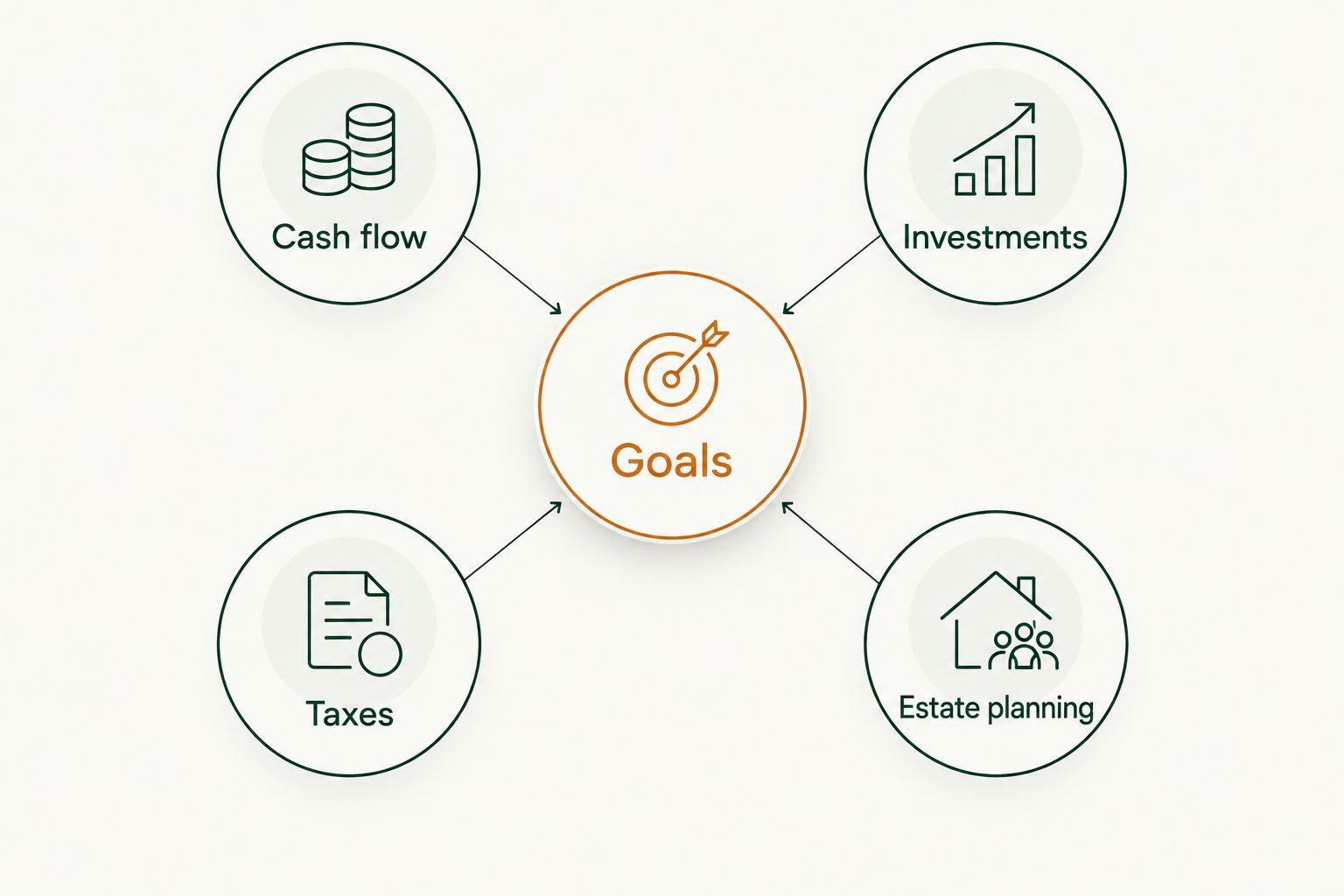
Build the agenda around decisions rather than account statements. A portfolio review belongs in the discussion, but it should connect to what the money needs to accomplish. For a 2026 review, use these categories to organize the conversation:
- Goals: What has changed about retirement, family support, giving, or other priorities?
- Cash flow: What income, spending, or near-term cash needs differ from the plan?
- Investments: Does the portfolio still fit your objectives, time horizon, and ability to tolerate losses?
- Taxes: Which planned actions need coordination with your tax professional before implementation?
- Estate planning: Do account ownership, beneficiaries, and legal documents reflect your intentions?
These topics belong together. A withdrawal is not just a portfolio transaction; it can affect cash flow and taxes. A beneficiary change is not just paperwork; it should fit the intended transfer of assets.
Before the meeting ends, ask for the decisions made, the work still open, and who owns each next step. A good discussion can leave some questions unresolved, but it should make the remaining work clear. You should not have to reconstruct the action plan from memory.
How do you agree on a useful meeting schedule?
Set expectations explicitly rather than assuming that ongoing advice means a particular number of appointments. Your agreement should distinguish formal reviews, implementation work, and questions between meetings. Use this sequence when establishing or revisiting the relationship:
- Describe upcoming decisions. Explain retirement plans, business changes, family responsibilities, and other known planning needs.
- Agree on scheduled reviews. Decide which conversations belong on the calendar and what each should cover.
- Define event-driven contact. Ask how to raise a time-sensitive issue and what information to provide.
- Clarify responsibilities. Identify who tracks follow-up work and coordinates with outside professionals.
- Reassess the schedule. Change the cadence when the planning workload changes.
VIMNewEngland provides fee-only financial planning and investment management as an integrated advisory relationship. VIMNewEngland is best suited to individuals, families, and business owners seeking coordinated financial planning and investment management. That approach is relevant when decisions cross savings, retirement, taxes, and estate planning; it does not replace the need to confirm meeting frequency, communication expectations, and service scope directly.
Discuss your planning priorities
Ask how scheduled reviews and between-meeting communication would fit your financial decisions.
Should you meet more often when markets fall?
An annual review schedule should not prevent a conversation when market losses expose a concern about your plan. Contact your advisor if you need cash sooner than expected, your goals have changed, or you discover that your tolerance for losses differs from what the plan assumed. Those are planning questions, not merely reactions to a headline.
A market decline alone does not tell you which action fits your circumstances. Ask whether the investment plan and cash arrangements still support your needs before making a change. Additional conversations should help you understand a decision, not create pressure to trade.
Should you meet before retiring?
An annual review is not a reason to postpone a retirement discussion until after you leave work. Meet before committing to the transition so anticipated spending, income sources, investment withdrawals, and related tax questions can be considered together. Bring the expected retirement date and any unresolved choices.
After retirement begins, revisit the plan when actual spending or income differs from the assumptions. The objective is to connect the plan with lived expenses, not to keep an artificially busy meeting calendar.
Is meeting frequency proof that an advisor is a fiduciary?
An annual review, a midyear check-in, or quarterly meetings do not establish fiduciary status. Meeting frequency describes contact; fiduciary responsibility concerns the obligations attached to the advisory relationship. Ask the advisor to explain those obligations and the scope of advice in writing.
Evaluate the substance of the relationship as well. You need understandable recommendations, disclosed conflicts, and clear service expectations. A crowded calendar is not a substitute for those answers.
FAQ
How often should I meet with my financial advisor?
Use an annual review as a starting recommendation, then add check-ins when your circumstances or unresolved decisions require them. Contact your advisor before consequential financial changes rather than waiting for the next appointment.
Is meeting my financial advisor annually enough?
An annual review can serve as the scheduled baseline when your financial circumstances are stable. It should still leave room for conversations about major changes between reviews.
Should retirees meet with their financial advisor more often?
Retirees should add meetings when withdrawals, spending, income sources, or other planning decisions need attention. Retirement alone does not establish the right schedule; the actual planning work does.
What should I bring to a financial planning meeting?
Bring updated financial information, relevant documents, and a list of decisions you need to make. Ask your advisor which records are necessary so preparation matches the meeting's agenda.
Should I contact my advisor before a large withdrawal?
Contact your advisor before a large withdrawal so its investment, cash-flow, and tax implications can be considered together. Share the purpose of the withdrawal and the date you need the money.
Does a fiduciary advisor have to meet with me quarterly?
Fiduciary status alone does not establish a quarterly meeting requirement. Confirm the review schedule, ongoing responsibilities, and communication expectations in your advisory agreement.
What should I ask VIMNewEngland about meeting frequency?
Ask VIMNewEngland how formal reviews, planning follow-up, and questions between meetings would fit your circumstances. Confirm the scope and communication expectations before establishing the relationship.
One last thing
Put the decisions on your 2026 calendar before putting the meetings there. Retirement dates, expected transactions, family changes, and outstanding estate work tell you when advice is needed. Then work backward to schedule the conversations that support those decisions.
Before ending your next review, ask: what should trigger a call before we meet again? A clear answer makes an annual schedule more useful than extra appointments with no defined purpose.