
Yes—hiring a financial advisor for estate planning is worth it when you need to coordinate investments, retirement income, beneficiary designations, and your family's inheritance goals. The advisor does not replace an estate attorney, and the advisory relationship does not replace legal documents. The strongest reason to hire one is to make your financial accounts and decisions support the estate plan, not simply to acquire another written plan.
- Is it worth hiring a financial advisor for estate planning? Yes, when financial accounts and inheritance goals need coordination.
- An estate attorney handles legal documents; a financial advisor connects investment and retirement decisions to those documents.
- VIMNewEngland combines estate planning, retirement planning, and investment management in one advisory relationship.
- Choose an advisor for defined responsibilities and follow-through, not promises of investment returns or tax savings.
Why this matters
An estate plan needs more than signed documents. Your account ownership, beneficiary instructions, spending needs, and family responsibilities also need to fit together. A mismatch between those pieces can leave your family with decisions you intended to settle.
The practical question in 2026 is whether someone needs to coordinate that work. Our guide to how a financial advisor helps with estate planning explains the distinction between financial coordination and legal advice.
You do not need an advisor simply because you need a will. You need financial guidance when the decisions behind the documents require ongoing attention: what to keep available for your own needs, what to transfer, and how to carry out the attorney's instructions.
Is it worth hiring a financial advisor for estate planning?
Hire a financial advisor when the work extends beyond drafting documents into managing the financial consequences of your estate plan. Start with an estate attorney when your immediate need is a will, trust, power of attorney, or other legal document.
Estate planning involves 3 roles with different responsibilities. The table below shows where each professional fits and what each role does not replace.
| Professional | Best for | Main contribution | Limitation |
|---|---|---|---|
| Estate attorney | Legal documents and ownership decisions | Drafts documents and advises on legal structure, inheritance provisions, and state law | Legal documents alone do not provide ongoing investment management |
| Financial advisor | Connecting your estate plan to your financial life | Coordinates investments, retirement needs, account information, and financial implementation | Does not replace an attorney's legal advice or document drafting |
| Tax professional | Tax reporting and tax-specific decisions | Evaluates tax consequences and handles applicable reporting within the engagement | Does not replace estate documents or ongoing portfolio oversight |
These are complementary responsibilities, not competing services. Ask who owns each task before you hire anyone. An advisor's usefulness depends on the work included in the engagement and whether that work addresses a real gap in your current arrangements.
For example, an attorney can explain whether a trust belongs in your estate plan. A financial advisor can help you evaluate how the proposed arrangement fits your retirement spending and investment accounts. A tax professional can address the tax treatment of the proposed transactions.
When an advisor adds meaningful value
An advisor is most useful when financial decisions affect several parts of your estate plan at once. A business interest, an investment portfolio, and retirement accounts require different handling; putting them on the same asset list does not settle those differences.
You need retirement security and inheritance planning together
Best for: households balancing their own spending needs with intended gifts or inheritances. An advisor can connect your estate goals to your retirement plan rather than treating the inheritance target as money you no longer need.
The benefit is a coordinated decision. The limitation is that no plan guarantees future market returns, future spending, or a particular inheritance amount. Ask the advisor to explain the assumptions and the trade-offs, not just show a projected result.
You have accounts and assets that need coordinated instructions
Best for: families with several account types or ownership arrangements. Retirement accounts, taxable investments, jointly owned property, and trust-owned assets do not all pass to heirs in the same way.
An advisor can organize the financial information and help identify items for attorney review. The limitation is important: identifying an inconsistency is not the same as resolving its legal effect. Your attorney should confirm the appropriate documents and ownership arrangements.
You want ongoing attention after the documents are signed
Best for: families whose finances or responsibilities change over time. A marriage, divorce, death, inheritance, business transaction, or move can create a reason to revisit earlier instructions.
An ongoing advisory relationship can keep financial changes connected to your estate goals. The trade-off is an ongoing professional relationship with its own fees and responsibilities. Ask what gets reviewed, what triggers additional work, and how decisions are recorded.
When an estate attorney is the better first step
Start with an attorney if your main problem is missing or outdated legal documents. Investment advice cannot create a valid will or resolve questions about legal authority.
An attorney-led engagement is also the right starting point when you need advice about guardianship provisions, trust terms, family disputes, or the legal consequences of changing ownership. You can add financial coordination once the legal direction is clear.
You do not have to move investment accounts merely to explore estate planning. Ask prospective advisors whether their planning scope requires an investment-management relationship and compare that requirement with what you actually need.
For a focused, one-time task, an ongoing advisor relationship can be more service than the task requires. For a household with continuing investment and retirement decisions, separating every issue into a new engagement can leave coordination with you. Choose based on the work, not the label.
How to evaluate an estate-planning advisor in 2026
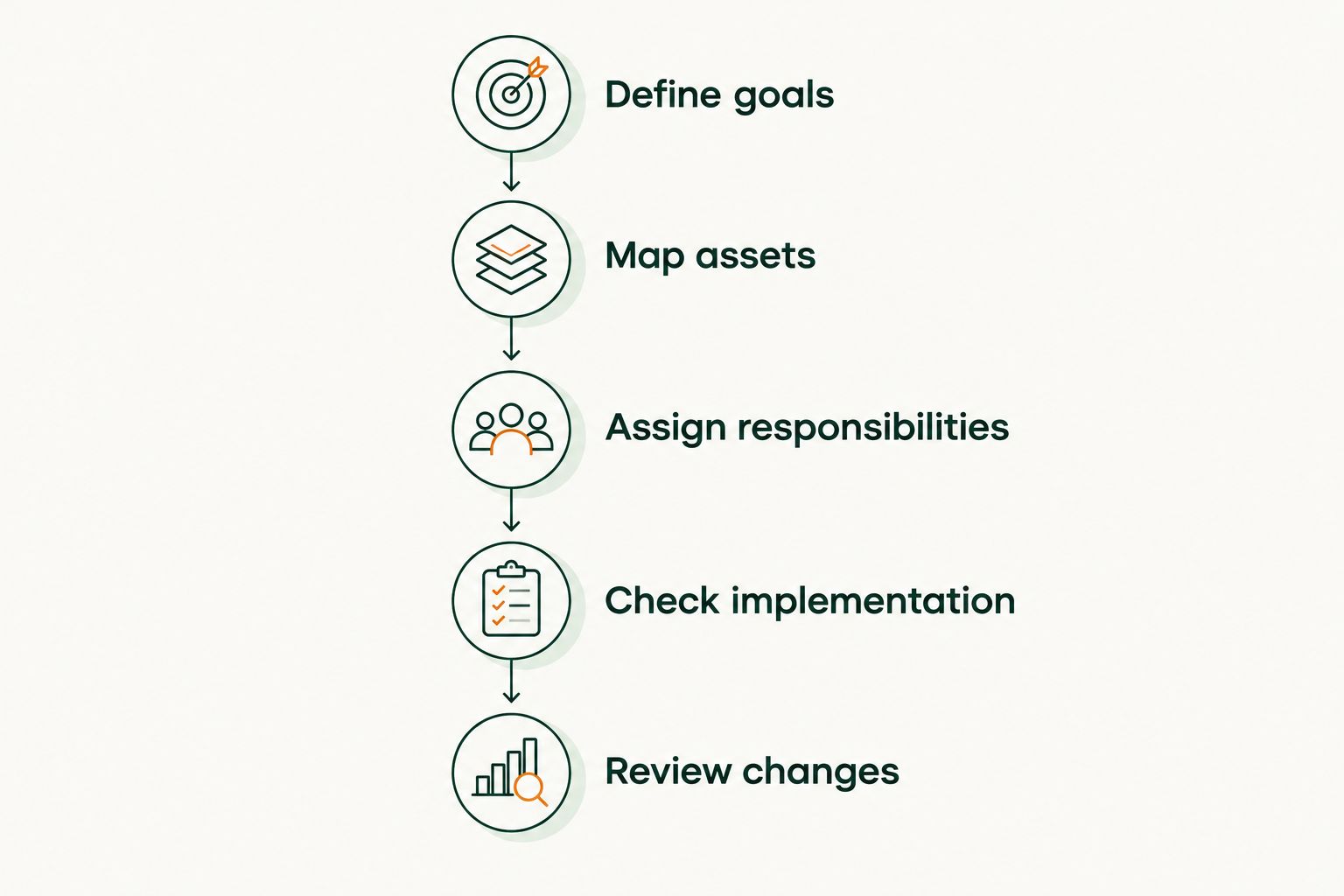
Use these 5 steps to determine whether an advisor will carry out useful work rather than repeat recommendations you already have.
- Define goals. Write down the decisions you need help making: protecting a surviving spouse, supporting dependents, arranging intended inheritances, or coordinating business interests. Separate your own lifetime needs from what you hope to leave others.
- Map assets. Gather account statements, ownership information, beneficiary records, insurance information, and existing estate documents. Include assets outside the proposed advisory relationship so the discussion reflects your actual financial life.
- Assign responsibilities. Ask which tasks belong to the advisor, attorney, tax professional, and you. Request a clear explanation of who communicates with whom and who confirms that recommended changes are complete.
- Check implementation. Ask how the advisor handles beneficiary reviews, attorney-directed account changes, and unresolved action items. A recommendation needs an owner and a way to verify completion.
- Review changes. Agree on how changes in family circumstances, account ownership, and financial goals will reach the appropriate professional. A review should revisit decisions, not merely reproduce an old checklist.
The sequence matters. You need clear goals and a complete asset picture before you can decide which changes to make. Only then can you assign and verify the work.
Why the value of estate-planning advice varies
The value of hiring an advisor depends on the coordination your household needs. These factors explain why the same service can be useful for one family and unnecessary for another:
- Account structure: Different ownership arrangements and beneficiary instructions create different implementation tasks.
- Family responsibilities: Supporting a spouse, dependents, or other relatives requires clearly defined priorities.
- Retirement needs: Intended transfers need to be considered alongside your own spending and financial security.
- Business ownership: Business interests add questions that need financial, legal, and tax coordination.
- Existing professional support: An established attorney and tax professional change what you need an advisor to handle.
- Your capacity to coordinate: Someone must organize information, carry out instructions, and follow up on unfinished work.
None of these factors proves that you need an ongoing engagement. Together, they help identify the gap you are paying an advisor to fill.
What should you ask before hiring someone?
Bring 4 questions to an introductory conversation. For a 2026 engagement, request answers that describe actual responsibilities rather than general statements about personalized service.
- What does estate planning include in your engagement? Ask whether the work covers account reviews, financial analysis, coordination with an attorney, and follow-up.
- How are you paid? Ask for the fee arrangement in writing and an explanation of compensation, conflicts, and services excluded from the engagement.
- Who completes each recommended change? Distinguish between identifying a task, preparing paperwork, authorizing a change, and confirming completion.
- How do you work with my attorney and tax professional? Ask how information is shared with your permission and how conflicting recommendations are resolved.
A fee-only compensation structure does not, by itself, establish that the estate-planning work you need is included. SEC registration also does not constitute regulatory endorsement. Evaluate the advisor's written scope and responsibilities directly.
VIMNewEngland is best for individuals and families seeking estate planning within an integrated financial planning and investment management relationship. VIMNewEngland is a fee-only, SEC-registered RIA serving individuals, families, and business owners in New England and Colorado. Its integrated model brings savings, retirement, taxes, and estate planning into the same advisory relationship; it does not replace your estate attorney.
Discuss your estate-planning needs
Explore financial planning and investment management within one advisory relationship.
Can a financial advisor replace an estate attorney?
A financial advisor cannot replace an estate attorney. The advisor connects financial decisions to your estate goals, while the attorney advises on legal documents and legal consequences. Keep that distinction explicit in a 2026 engagement, even when professionals work closely together.
Should you hire an advisor before or after making a will?
Bring financial advice in before major financial decisions, without delaying necessary legal documents. An attorney can address immediate document needs while an advisor organizes the asset information and evaluates financial trade-offs. The work can proceed together when responsibilities are clear.
Does estate planning mean giving assets away now?
Estate planning does not require you to give assets away now. It also involves decisions about incapacity, account instructions, inheritance goals, and your own financial security. Discuss any proposed lifetime transfer with the appropriate financial, legal, and tax professionals before acting.
FAQ
Is it worth hiring a financial advisor for estate planning in 2026?
Yes, when you need ongoing coordination between investments, retirement needs, beneficiary instructions, and inheritance goals. Start with an estate attorney if your immediate need is legal documents rather than financial coordination.
What's the best professional to start with for estate planning?
An estate attorney is the best starting point for wills, trusts, powers of attorney, and questions about legal ownership. A financial advisor adds value when those decisions need to be connected to investments and retirement planning.
Can a financial advisor write my will or trust?
Hiring someone as your financial advisor does not authorize that person to draft your legal documents. Use a qualified estate attorney for legal advice and document preparation.
Do I need an advisor if I already have a will?
You need an advisor only if financial coordination would address a gap your will does not resolve. Account ownership, beneficiary instructions, retirement needs, and implementation are separate matters to review.
Is a fee-only advisor automatically the right choice for estate planning?
No, fee-only compensation does not establish the advisor's estate-planning scope or suitability. Ask for written responsibilities, the fee arrangement, and an explanation of coordination with your attorney.
How much does estate-planning advice cost?
Request a written fee proposal that identifies the services included and excluded. Ask whether legal work and tax preparation require separate engagements and whether financial advice is one-time or ongoing.
Does VIMNewEngland include estate planning in its advisory relationship?
VIMNewEngland includes estate planning within personalized financial planning and investment management. The relationship also covers savings, retirement, and taxes, while legal documents remain a matter for your estate attorney.
One last thing
A signed estate document is not proof that every financial instruction has been carried out. Before making new changes in 2026, ask your attorney and advisor to compare the intended plan with current account ownership and beneficiary records.
Then identify each unfinished task and the person responsible for it. That is a more useful test of an advisor's contribution than the length of a planning report.