
Wealth management is worth it for high net worth individuals when investment decisions, retirement income, taxes, and estate planning need ongoing coordination—not simply because an account balance is large. The trade-off is an ongoing advisory expense and a relationship that still requires your participation; the service should address decisions you cannot confidently manage alone.
- Is wealth management worth it for high net worth individuals? Yes, when financial planning connects decisions across your finances.
- VIMNewEngland is best for New England individuals, families, and business owners seeking integrated financial planning and investment management.
- Ongoing wealth management fits recurring decisions; project-based advice fits a defined question with a clear endpoint.
- Judge advice by its scope, conflicts, and follow-through—not promises of market outperformance.
Is wealth management worth it for high net worth individuals?
Yes, when the relationship solves recurring planning problems rather than only selecting investments. A large portfolio does not automatically require ongoing advice. Interdependent decisions create the stronger case: a withdrawal affects taxes, a business sale affects retirement, and an inheritance affects both investments and estate planning.
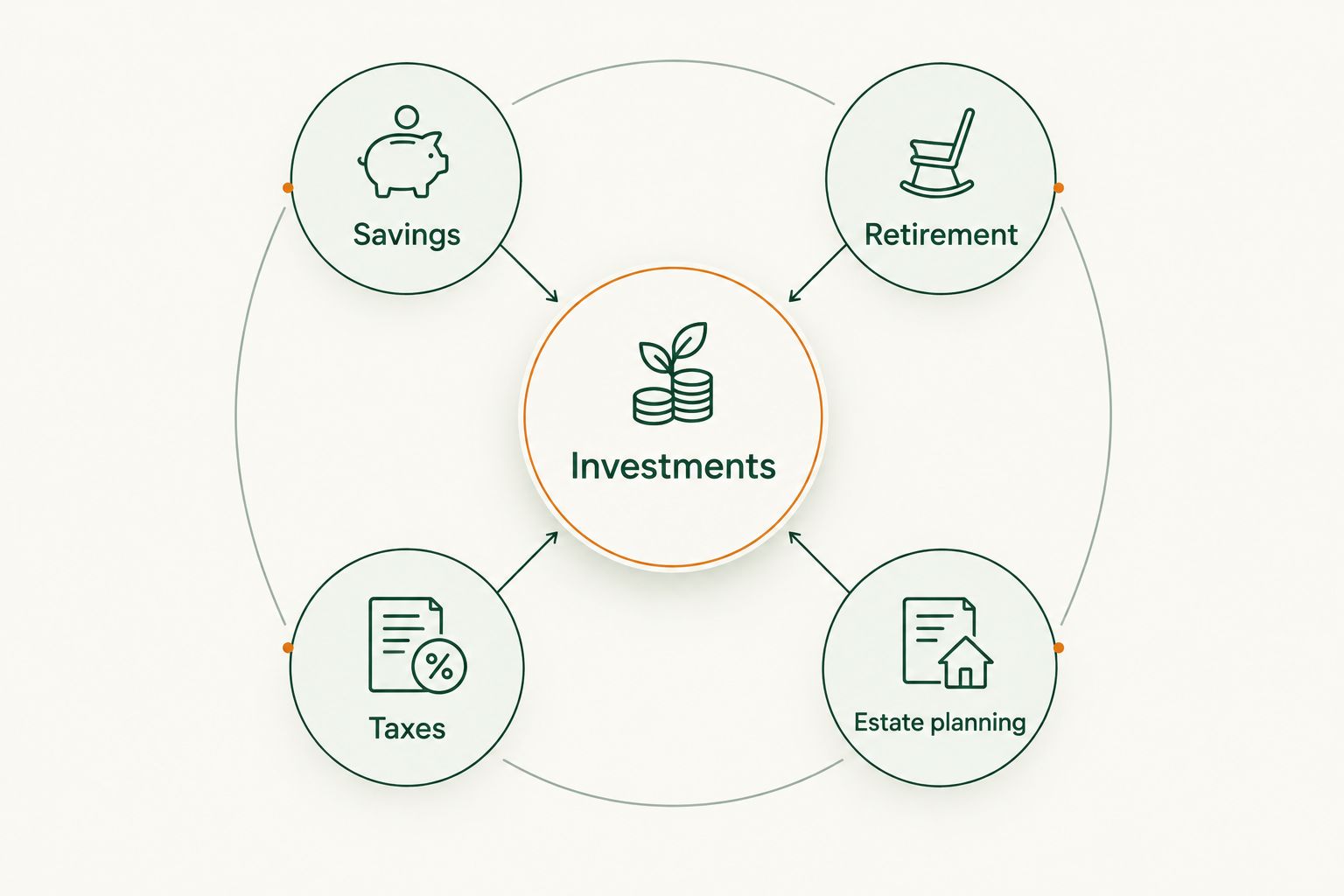
VIMNewEngland provides fee-only financial planning and investment management as an integrated advisory relationship. Its stated scope includes savings, retirement, taxes, and estate planning. That scope is relevant when you want those decisions considered together, rather than treated as unrelated assignments.
Use this comparison to match the service to the work you need done in 2026.
| Approach | Best for | Main benefit | Main limitation |
|---|---|---|---|
| Self-directed management | People comfortable making and implementing their own decisions | You retain direct control over decisions and execution | You remain responsible for research, coordination, and follow-through |
| Project-based financial planning | People with a defined decision or planning question | Advice addresses a specific problem with a clear endpoint | Continuing implementation and updates depend on the agreed scope |
| Ongoing wealth management | People with recurring investment and planning decisions | An ongoing relationship can connect portfolio management with broader financial goals | The relationship adds an ongoing expense and requires clear responsibilities |
These are service models, not interchangeable products. Before choosing one, ask what work is included, what remains your responsibility, and what happens when your circumstances change.
Why this matters
Financial decisions rarely stay inside a single account. Selling an investment can affect taxes. Retiring changes the purpose of a portfolio. Updating an estate document does not, by itself, update every account's ownership or beneficiary designation.
The practical question is whether someone is responsible for connecting those decisions. You can perform that role yourself, but it takes attention and follow-through. An advisor earns a place when the relationship provides useful judgment and implementation—not just another statement to review.
For your 2026 review, start with unfinished decisions rather than recent investment returns. List what remains unresolved, identify who owns each task, and distinguish an isolated question from an ongoing planning need.
When ongoing wealth management fits
Ongoing wealth management fits situations in which decisions keep changing and need to be considered together. That includes preparing for retirement while managing taxable investments, planning around a business interest, or coordinating family goals with estate documents.
Choose an ongoing relationship for ongoing work. Ask the advisor to explain how a change in one part of your financial life affects the others. A discussion about retirement withdrawals, for example, should consider spending needs and taxes rather than treating the portfolio as a separate problem.
The limitation is that delegation is not disappearance. You still need to communicate changes, supply records, approve relevant decisions, and understand the plan. An advisor cannot incorporate information you have not shared.
A useful relationship also has boundaries. Confirm who prepares tax returns, who drafts legal documents, and how the advisor coordinates with those professionals. Financial planning is not a substitute for separately agreed accounting or legal work.
When project-based planning fits
Project-based planning fits a defined question whose answer does not require continuous portfolio oversight. You might need help assessing retirement readiness, reviewing an existing plan, or evaluating the implications of a major financial decision.
The advantage is focus. You can agree on the question, required information, and deliverables before the engagement begins. Ask whether the work includes recommendations only or support with carrying them out.
The limitation is continuity. A completed plan does not automatically update when your family, income, or goals change. You need a clear understanding of whether follow-up is included and who monitors implementation afterward.
Choose project-based planning when you can carry out the recommendations and recognize when the assumptions need another review. If those responsibilities are precisely what you want to delegate, an isolated project does not solve the whole problem.
When self-directed management fits
Self-directed management fits people who understand their investments, maintain a repeatable decision process, and coordinate their planning responsibilities. Wealth alone does not make this approach inappropriate.
Its advantage is direct control. You decide what to hold, when to act, and which specialists to consult for particular questions. The limitation is that you also own the gaps between those decisions.
Before choosing this route, ask whether you can explain how your portfolio supports spending, how account types affect withdrawal decisions, and how account ownership relates to your estate intentions. Separate confidence in investing from confidence in financial planning.
Keep self-directed management when you can demonstrate a working process, not merely familiarity with your holdings. If you routinely postpone decisions or cannot identify who is responsible for them, outside advice deserves consideration.
Why the value of wealth management varies
The value depends on the work required and the quality of the relationship. A longer list of services is not automatically a better fit; the relevant services must address your actual decisions.
- Savings: Your plan should distinguish money needed for spending or upcoming obligations from money intended for longer-term investment.
- Retirement: Advice should connect your retirement timing, income sources, withdrawals, and investment approach.
- Taxes: Investment recommendations should consider tax consequences, with clear coordination where a tax professional is involved.
- Estate planning: Account ownership and beneficiary choices should be considered alongside your intended transfers and legal documents.
- Investments: Portfolio decisions should reflect your goals, time horizon, and ability to tolerate losses—not only a return target.
These connections are the central test for an integrated relationship. If each topic is discussed independently and nobody addresses the interactions, you are still doing the coordination yourself.
How do you tell whether an advisor will be useful?
Evaluate the proposed work before evaluating the sales presentation. An advisor should be able to describe the decisions the relationship will address and what implementation will require from you.
- Define the decisions. Write down the questions you need answered. Distinguish portfolio questions from retirement, tax, family, and estate questions.
- Confirm the scope. Ask which questions the advisor handles directly and which require coordination with another professional. Request a written description of the engagement.
- Understand compensation. Ask how the advisor and firm are paid, what expenses are separate, and what conflicts are disclosed. Fee-only compensation does not eliminate the need to understand the arrangement.
- Assign responsibility. Establish who acts on recommendations, who monitors outstanding tasks, and how you communicate changes. Avoid assuming that a discussed action has been completed.
- Set review criteria. Agree on how you will assess whether the relationship is doing its job. Include planning progress and implementation, not just portfolio performance.
For your 2026 advisor interviews, bring the same decision list to each meeting. Consistent questions make differences in scope easier to recognize.
Use the guide to fiduciary financial advisor qualities to frame your questions about obligations, communication, and conflicts. Registration and professional terminology are starting points for due diligence, not substitutes for understanding the engagement.
What should you expect beyond investment returns?
Expect recommendations tied to your circumstances and a clear explanation of the trade-offs. No advisor can promise that ongoing wealth management will beat the market or produce a particular financial result.
Useful advice explains why a recommendation fits your plan, what assumptions support it, and what would cause you to reconsider it. That reasoning matters when markets decline or your circumstances change. You should understand the purpose of the decision before you approve it.
Assess follow-through as well. If a recommendation involves another professional or an account change, ask who coordinates the next step. A plan that remains unimplemented cannot accomplish its intended purpose.
For a 2026 relationship review, separate market outcomes from service delivery. Portfolio results matter, but they do not tell you whether the advisor addressed retirement decisions, coordinated relevant planning work, or completed agreed tasks.
Is wealth management worth it if you already have a CPA?
Wealth management can still be worth it when your needs extend beyond the CPA's agreed scope. Tax preparation, tax advice, investment management, and retirement planning are distinct responsibilities, even when they overlap.
Ask who evaluates investment decisions in the context of your broader plan and who communicates relevant information between professionals. The goal is coordinated responsibility, not duplicated work.
Is wealth management worth it if you invest yourself?
Wealth management can still be worth it when investing is manageable but financial coordination is not. Selecting and maintaining investments does not answer every question about retirement income, taxes, or estate intentions.
If you want advice without delegating investment management, ask whether the proposed engagement permits that arrangement. Do not assume every firm offers every service model.
Can you assess an advisor without a market-outperformance promise?
Yes—assess the quality of decisions, implementation, and accountability. Ask what changed because of the advice, whether the recommendation addressed your goals, and whether agreed work was completed.
Keep the assessment specific. A calmer experience is valuable to you, but it should accompany understandable recommendations and clearly assigned responsibilities—not replace them.
Explore an integrated advisory relationship
Consider how financial planning and investment management fit your retirement, tax, and estate decisions.
FAQ
Is wealth management worth it for high net worth individuals in 2026?
Yes, when recurring investment, retirement, tax, and estate decisions need ongoing coordination. A large balance alone does not establish the need for an ongoing advisory relationship.
What's the best way to decide whether I need wealth management?
List the decisions you cannot confidently make or implement yourself. Match those needs to a written service scope before choosing ongoing management, project-based planning, or self-directed management.
Is a fee-only advisor automatically the right choice?
No—fee-only describes compensation, not whether the advisor's scope fits your needs. Review the engagement, disclosed conflicts, responsibilities, and separate expenses.
Can a wealth manager replace my accountant and estate attorney?
No—do not assume wealth management includes tax preparation or legal drafting. Confirm the advisor's responsibilities and how the relationship coordinates with your accountant and estate attorney.
What is VIMNewEngland best for?
VIMNewEngland is best for New England individuals, families, and business owners seeking integrated financial planning and investment management. Its stated planning scope includes savings, retirement, taxes, and estate planning.
What should I bring to an advisor meeting?
Bring your goals, unresolved questions, and an overview of your accounts and obligations. Ask how to share sensitive records securely before sending detailed financial documents.
Does wealth management guarantee better investment performance?
No—wealth management does not guarantee better investment performance. Evaluate the relationship's planning work, decision process, and implementation alongside investment results.
One last thing
The best opening question is not what an advisor expects the market to do. It is who will take responsibility for connecting your decisions. Ask for an example using your own unresolved planning question, and listen for the assumptions, trade-offs, and next actions.
In 2026, assess VIMNewEngland wealth management against that same standard: does the proposed integrated relationship address the decisions you need help making? Choose the service that fits the work, and keep the responsibilities clear.
This article provides general educational information, not individualized investment, tax, or legal advice.