
Yes, a fiduciary advisor can help you choose investments, review contributions, and coordinate your workplace 401(k) with your broader retirement plan without necessarily moving the account. Advice does not automatically include permission to trade: your employer’s plan rules and the advisor’s agreement determine who can make changes.
- Can a fiduciary advisor help with a 401k at work? Yes; investment advice does not require a rollover.
- Your employer’s plan controls available investments, account access, and distribution eligibility.
- Ask whether your advisor provides recommendations only or can implement changes through an authorized arrangement.
- VIMNewEngland provides integrated financial planning and investment management; confirm whether workplace retirement advice is included.
Why this matters
Your workplace retirement account belongs in your financial plan even when an outside advisor cannot manage it directly. Otherwise, investment decisions inside the plan can work against decisions in your IRA, taxable accounts, or spouse’s retirement accounts.
For your 2026 review, separate the advisor’s responsibilities from the plan administrator’s responsibilities. Start with the fiduciary advisor qualities to look for, then ask for a written explanation of the help your engagement includes. A fiduciary commitment matters, but it does not replace a clear service agreement.
Can a fiduciary advisor help with a 401k at work?
Yes. A fiduciary advisor can evaluate your available funds, recommend an allocation, and connect your workplace savings decisions to your retirement goals. The employer’s plan still determines which investments and account features you can use.
The useful distinction is advice versus implementation. Recommendations tell you what to change; implementation means someone has authorized access to make those changes.
| Type of help | Best for | Benefit | Limitation |
|---|---|---|---|
| Recommendations you implement | Employees comfortable making account changes | Connects investment selections to a household plan | You remain responsible for entering changes correctly |
| Advice coordinated with plan services | Employees whose plan offers investment assistance | Uses services available through the workplace plan | Scope and eligibility depend on the plan |
| Authorized outside management | Employees whose plan and advisor support the arrangement | Allows implementation within the permitted arrangement | Not every plan or advisor supports this access |
None of these arrangements automatically makes an outside advisor the fiduciary responsible for your entire employer plan. Ask which responsibilities the advisor accepts for your account and which remain with the plan’s existing providers.
What useful advice looks like
A recommendation should identify the available funds to use, explain their role, and show how the allocation fits your other investments. A generic suggestion to “be more diversified” leaves too much work with you.
Ask the advisor to distinguish changes to your existing balance from changes to future contributions. Plan systems can treat those as separate instructions, so changing one does not necessarily change the other.
What can an advisor review while you are still employed?
An active workplace account can receive planning attention without becoming an advisor-managed account. The review starts with the choices your plan actually permits, not investments available somewhere else.
Investment allocation
Your advisor can review how much of your retirement savings is allocated to stocks, bonds, and other permitted investments. The goal is to match risk to your circumstances and account for investments held elsewhere.
For example, a target-date fund already contains an investment mix. Adding other funds without examining their holdings can create overlap rather than meaningful diversification. A custom allocation offers more control, but it also requires ongoing decisions and maintenance.
Contributions and employer matching
An advisor can help you evaluate payroll contributions alongside household spending, other savings goals, and the employer’s matching formula. Your benefits materials establish how that formula works.
For a 2026 contribution review, bring your current payroll election and recent pay statements. Ask whether the recommendation addresses both your annual savings goal and the timing rules that apply to your employer’s match.
Traditional and Roth contributions
If your plan offers both contribution types, an advisor can help compare paying income tax now with deferring income tax until withdrawal. The decision should account for your current tax circumstances and expected retirement income, not just your age.
Neither choice is automatically better. Roth contributions reduce current take-home pay differently from pre-tax contributions, while future tax treatment depends on the account and applicable distribution rules.
Household coordination
An advisor can evaluate the workplace account alongside your spouse’s accounts, taxable investments, cash reserves, and other retirement savings. That broader view helps identify duplicated investment exposure and competing demands on your savings.
The practical question is not whether every account has the same allocation. It is whether the accounts work together toward your household’s goals.
How do you get help without moving your 401(k)?
Start with the plan documents and a written scope of advice, not a transfer form. Your current employer’s account can remain where it is while an advisor evaluates the information you provide.
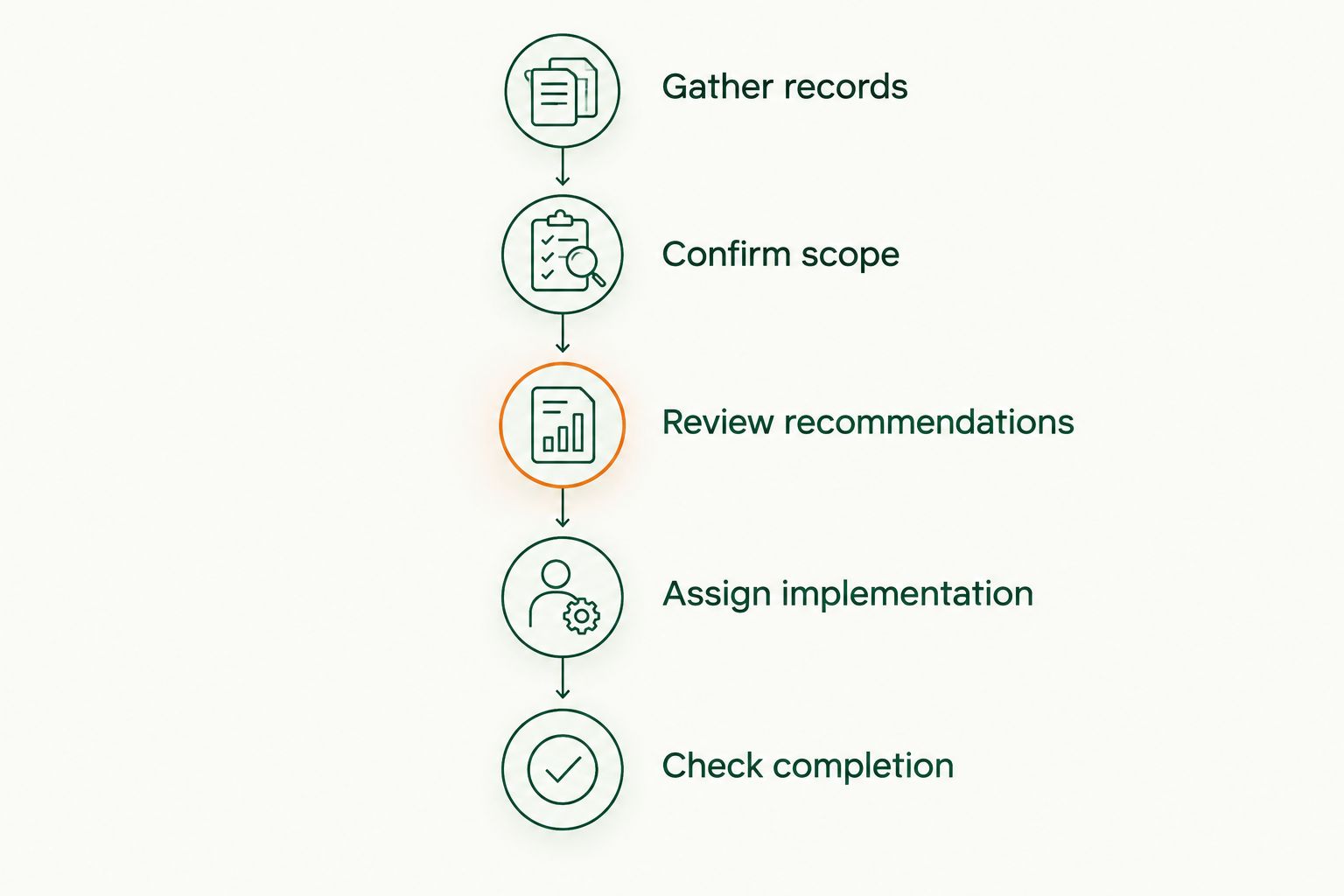
- Gather records. Collect a recent statement, investment menu, participant fee disclosure, contribution election, and summary plan description. Include beneficiary information for review without sharing account passwords.
- Confirm scope. Ask whether workplace retirement recommendations are part of the advisory engagement. Clarify whether the advisor reviews contributions, investments, beneficiaries, and retirement income needs.
- Review recommendations. Request specific proposed changes and the reasons behind them. Make sure the advisor has considered your other accounts and the investments your plan actually offers.
- Assign implementation. Establish who enters each change and what authorized access, if any, is required. Do not assume an account connection permits trading.
- Check completion. Confirm that changes affected the intended holdings and contribution elections. Agree on when the account will be reviewed again and which events should trigger an earlier conversation.
These steps separate planning decisions from account permissions. They also give you a record of what was recommended, what was completed, and what still requires action.
Protect your account access
Use only access methods approved by the plan provider and advisory firm. Read-only access, trading authorization, and withdrawal authority are different permissions.
Ask what information an account connection shares and whether anyone can change investments through it. Do not treat a request for your password as proof of an approved advisory arrangement.
Why workplace 401(k) advice varies
The same advisor cannot necessarily provide the same implementation services across different employers’ plans. For a 2026 review, check these factors before agreeing on the work:
- Investment menu: Recommendations must account for the funds and other investments the plan makes available.
- Access rules: The plan determines whether an outside professional can receive information or obtain authorized trading access.
- Advisory scope: An engagement can include household planning without including direct management of the workplace account.
- Contribution features: Matching provisions and available contribution types shape the savings recommendation.
- Distribution eligibility: Employment status and plan terms affect whether money can leave the account.
- Household circumstances: Retirement timing, other assets, tax circumstances, and cash needs change what an appropriate recommendation looks like.
Ask the advisor to explain constraints plainly. “The plan does not permit that” and “our engagement does not include that” are different answers, and each calls for a different next step.
Do you have to roll over your 401(k) to get advice?
No. A rollover is not a prerequisite for financial advice about a workplace account. Whether you can move money while employed is a separate question governed by your plan and applicable distribution rules.
A rollover changes the account arrangement; it is not simply an administrative step toward receiving advice. Before recommending one, an advisor should compare the existing plan with the proposed destination, including investment choices, services, expenses, withdrawal rules, and relevant creditor protections.
Ask how the advisor’s compensation would change if assets moved into an account the advisor manages. A fiduciary relationship does not eliminate the need to understand that incentive.
For the mechanics of an eligible transfer, review the 401(k)-to-IRA rollover workflow. Decide whether a rollover serves your interests before starting the paperwork.
Withdrawal rules deserve a separate review
For 2026 decisions, distinguish a rollover from taking money out to spend. IRS guidance generally treats withdrawals before age 59½ years as early distributions, and taxable early distributions can carry a 10% additional federal tax unless an exception applies.
An eligible distribution paid to you generally has a 60-calendar-day rollover deadline under IRS rollover rules, subject to applicable exceptions. A direct rollover avoids the need for you to receive and redeposit the distribution, but eligibility and tax treatment still require review.
These rules do not establish that your current plan permits a distribution. Confirm eligibility with the plan administrator and review tax consequences before authorizing a transaction.
Can your advisor change investments for you?
Only if the plan permits the arrangement and the advisor has the required authorization. An advisor who can see your balance does not necessarily have permission to place trades.
If you implement recommendations yourself, ask for instructions that identify the funds and explain how to handle existing holdings and future contributions. Afterward, provide confirmation so the advisor can review whether the intended changes occurred.
What should you ask before hiring an advisor?
Ask: “Will you advise on my current employer’s 401(k) without requiring a rollover, and who will implement your recommendations?” That question establishes whether the relationship fits the problem you need solved.
Then request written answers to these questions:
- Will you act as a fiduciary when advising on this account?
- What workplace retirement advice does the agreement include?
- How are you compensated for this work?
- How would your compensation change after a rollover?
- Will recommendations account for my spouse’s investments and other assets?
- Who checks that recommendations were implemented correctly?
Specific answers are more useful than a broad promise to “handle retirement.” You should understand both the service and its limits before signing.
Where VIMNewEngland fits
VIMNewEngland is best for New England households seeking integrated financial planning and investment management. Its stated service model connects savings, retirement, taxes, and estate planning within one advisory relationship.
That approach fits a workplace retirement question that affects the rest of your financial life. The limitation is that integrated planning does not, by itself, establish permission to trade inside an employer’s plan.
Before choosing VIMNewEngland for this need, confirm whether advice on your active workplace account is included, what documents are required, and who implements recommendations. The firm’s fee-only, SEC-registered RIA status does not replace those account-specific answers or guarantee investment results.
Discuss your retirement planning needs
Ask how workplace savings would fit within an integrated financial planning relationship.
FAQ
Can a fiduciary advisor help with my current employer’s 401(k)?
Yes, a fiduciary advisor can recommend investments and coordinate your current employer’s 401(k) with your broader financial plan. Your plan rules and advisory agreement determine whether the advisor can implement changes.
Do I need to move my 401(k) to work with a financial advisor?
No, receiving advice does not inherently require moving your 401(k). Confirm that your advisor’s engagement includes recommendations for assets held in your employer’s plan.
Can an outside advisor choose my workplace retirement funds?
An outside advisor can recommend funds from your plan’s available investment menu. Making those changes directly requires a permitted arrangement and appropriate authorization.
Is a target-date fund enough for my workplace retirement account?
A target-date fund can provide a diversified investment mix, but suitability depends on its holdings, risk level, and your other assets. Ask an advisor to evaluate the fund within your household allocation rather than in isolation.
Will hiring an advisor change my employer’s retirement plan?
Hiring a personal advisor does not change your employer’s plan rules or available investments. The advisor works within those constraints unless a separately permitted account arrangement applies.
Can my advisor help me choose Roth or pre-tax 401(k) contributions?
Yes, an advisor can compare Roth and pre-tax contributions if your plan offers both. The recommendation should consider current taxes, expected retirement income, and household cash needs.
What should I bring to a workplace retirement planning meeting?
Bring your statement, investment menu, participant fee disclosure, contribution election, and summary plan description. Include information about other household accounts so the recommendation reflects your broader finances.
One last thing
Changing where new contributions go does not necessarily change how your existing balance is invested. During your 2026 review, ask for separate confirmation of both instructions; a sensible recommendation is only useful when the intended changes actually happen.
This article provides general education, not individualized investment, tax, or legal advice. Review decisions against your plan documents and personal circumstances.