
There is no universal net-worth minimum for wealth management in 2026; eligibility depends on the advisory firm's requirements and the assets it agrees to manage. Your home and business can increase your net worth without counting toward an investment-account minimum, so ask about eligible assets before deciding whether you qualify.
- How much net worth do you need for wealth management? Each firm sets its own eligibility requirements.
- Net worth and investable assets measure different things; property equity does not automatically satisfy an account minimum.
- VIMNewEngland provides integrated financial planning and investment management for individuals, families, and business owners.
- Choose the advisory scope that fits your retirement, tax, and estate decisions—not just your account balance.
How much net worth do you need for wealth management services?
You need to meet the firm's eligibility requirements, not a universal net-worth threshold. Ask whether the requirement applies to total wealth, investable assets, assets under management, or assets across your household. Those terms are not interchangeable.
For an integrated advisory relationship, VIMNewEngland combines financial planning and investment management. Before choosing any firm, establish which assets count toward eligibility and which decisions the relationship covers.
| Measure | What it means | What to clarify with an advisor |
|---|---|---|
| Net worth | The value of your assets minus your liabilities | Does the firm use this measure for eligibility? |
| Investable assets | Financial assets available for investment, subject to the firm's definition | Which accounts and holdings count? |
| Assets under management | Assets the advisor manages under the agreed arrangement | Must these assets move into managed accounts? |
| Household assets | Assets considered together across members of your household | Does the firm combine accounts for eligibility? |
A large balance sheet does not automatically produce a large managed portfolio. Conversely, someone with fewer property or business assets can have a substantial investment portfolio and a clear need for coordinated advice.
The useful question is therefore more specific than whether you are wealthy enough: Which assets will this advisor count, and what work will the advisor do for you?
Why this matters
A threshold answers an access question. It does not answer whether the service fits your financial life.
You can qualify for an advisory relationship and still choose the wrong scope. Portfolio management alone does not necessarily address retirement withdrawals, tax-sensitive investment decisions, or the connection between investment accounts and estate documents.
In 2026, start your search with the decisions you need help making. Then compare eligibility, services, responsibilities, and the advisory agreement against that list. This keeps the conversation focused on useful work rather than a status label.
Net worth: your whole balance sheet
Net worth includes what you own and subtracts what you owe. A home, investment accounts, cash, and business interests belong on the asset side; mortgages and other debts belong on the liability side.
That makes net worth useful for understanding your overall position. It does not tell you how much money is available to invest, how accessible your assets are, or what an advisor can manage.
For a New England homeowner, property equity belongs in the financial plan even when it stays outside the investment portfolio. Housing costs, debt, and plans to move still affect retirement decisions.
Business ownership creates a similar distinction. Your business can represent a substantial share of your wealth without being an asset you can transfer to an investment manager. Its role in your plan is different from the role of a brokerage account.
Keep property and business values visible in your planning documents, but separate them from assets proposed for management. That distinction makes an initial advisory conversation more productive and prevents an inflated eligibility estimate.
Investable assets: the eligibility question to clarify
Investable assets are closer to the money an advisor can help allocate or manage. The exact definition still matters because the firm decides which assets satisfy its requirements.
Prepare a list of your taxable investment accounts, retirement accounts, and cash intended for investment. Identify restrictions, account ownership, and money reserved for near-term needs. Do not assume every account belongs in the same management arrangement.
An employer retirement plan, for example, needs separate discussion from an individually owned investment account. Ask whether the advisor manages it, provides guidance on it, or excludes it from the engagement.
Use these questions before transferring anything:
- Which account types count toward your eligibility requirement?
- Do you count accounts across spouses or other household members?
- Do assets outside your management count toward eligibility?
- Which holdings can remain in place, and which require separate review?
- What happens if withdrawals reduce the assets you manage?
For your 2026 review, request an explanation that names your actual account types. A generic statement about serving wealthy clients does not resolve account-level questions.
Which kind of advisory help fits your situation?
The right comparison is between service scopes, not just account sizes. Financial planning, investment management, and integrated wealth management address different responsibilities; the agreement determines what you actually receive.
| Advisory scope | Best for | Main benefit | Limitation to examine |
|---|---|---|---|
| Financial planning engagement | A defined question or a coordinated financial roadmap | Connects goals, savings, retirement, taxes, and estate considerations | Investment implementation and ongoing updates depend on the engagement |
| Investment management | Delegating portfolio decisions within an agreed mandate | Assigns responsibility for managing investments | Broader planning is not automatically included |
| Integrated wealth management | Connecting investment decisions with the rest of your financial life | Combines planning and portfolio management in one relationship | Requires sharing information across accounts, goals, and family circumstances |
Choose financial planning when the central need is a decision or roadmap. Choose investment management when the central need is portfolio responsibility. Choose integrated wealth management when those needs are connected.
An integrated relationship also requires coordination. You still need to establish who handles tax preparation, legal documents, and implementation outside the advisor's scope. A broad service description is not a substitute for defined responsibilities.
VIMNewEngland wealth management is best for individuals, families, and business owners seeking financial planning and investment management in one advisory relationship. Its integrated scope connects savings, retirement, taxes, and estate planning; confirm the specific engagement responsibilities before hiring.
Why wealth management eligibility varies
Firms define their advisory relationships differently. That makes eligibility a question about the proposed engagement, not simply a calculation of your personal wealth.
The differences to investigate are practical:
- Service scope. Establish whether the relationship includes planning, investment management, or both.
- Eligible accounts. Ask which assets the advisor can manage and which remain outside that arrangement.
- Household treatment. Confirm whether related accounts are considered together or separately.
- Business and property assets. Separate assets included in planning from assets accepted for investment management.
- Ongoing responsibilities. Identify what the advisor monitors and what you must report or maintain.
- Specialist coordination. Clarify how investment advice connects with your accountant's and attorney's work.
Do not infer eligibility from a firm's name or from the phrase personal wealth manager. Ask for the requirement that applies to your situation, along with an explanation of what happens after you qualify.
How do you prepare for a wealth management conversation?
Bring an organized picture of your finances, not a perfectly polished plan. An advisor needs to understand what you own, what you owe, and which decisions are creating uncertainty.
For a 2026 conversation, use this sequence to separate eligibility from the work you want done.
- List assets. Record accounts, ownership, property, and business interests. Keep readily investable assets separate from assets that are harder to sell or transfer.
- List debts. Include mortgages and other obligations so the discussion reflects your net worth rather than asset values alone.
- Identify decisions. Write down the retirement, investment, tax, or estate questions you need to resolve. Name the decisions before asking for a service recommendation.
- Confirm eligibility. Ask which assets count, whether household accounts combine, and what the firm requires for the proposed relationship.
- Define responsibilities. Establish who recommends, implements, monitors, and coordinates each part of the plan.
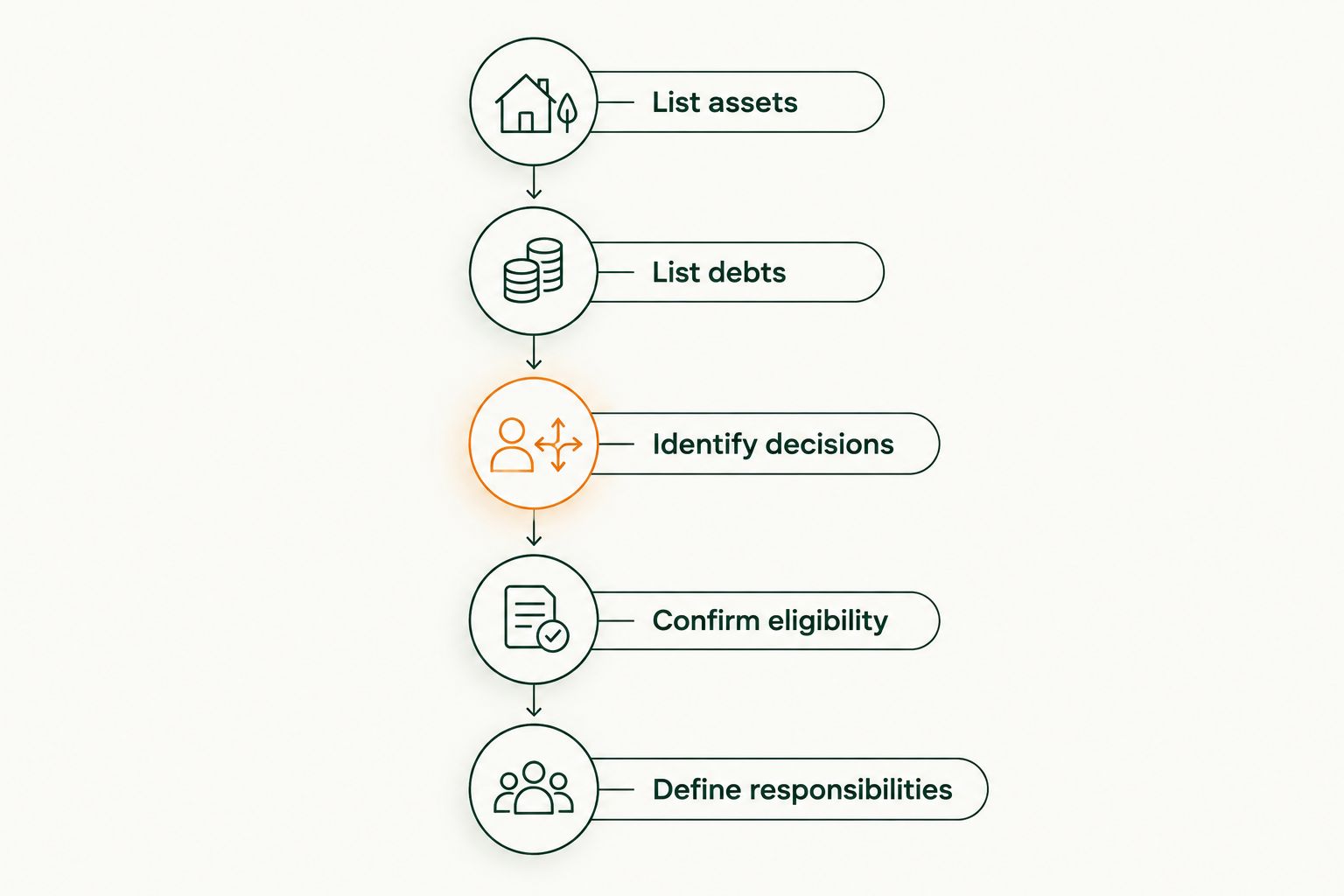
Keep your documents consistent with that outline. Account statements help establish investable assets, while debt records and property information help explain the broader balance sheet. Existing estate documents and tax records give context for coordination without turning the advisor into your attorney or tax preparer.
You do not need to settle every issue before contacting an advisor. You do need enough information to distinguish the assets available for management from the financial decisions that require planning.
What should you verify before hiring an advisor?
Verify the relationship, not just the threshold. An eligibility requirement tells you whether a conversation can proceed; the agreement tells you what you are hiring the advisor to do.
Ask how the advisor is compensated, what fiduciary responsibilities apply, and where the service boundaries sit. Fee-only describes compensation. SEC registration is a regulatory status, not a promise of investment results.
VIMNewEngland is a fee-only, SEC-registered investment advisory firm. Assess that structure alongside the proposed services, communication expectations, and division of responsibilities.
Before signing, resolve these points:
- Whether the advisor provides ongoing planning or a defined planning engagement.
- Which investment accounts fall under the advisor's management.
- How the advisor incorporates assets held elsewhere into planning.
- How retirement, tax, and estate decisions are coordinated.
- Who is responsible for implementing recommendations outside managed accounts.
- How you will report changes in family circumstances, income, or goals.
No advisor can remove investment risk or guarantee that a plan will achieve every goal. A useful relationship provides clear responsibilities and a process for revisiting decisions as circumstances change.
Explore an integrated advisory relationship
Review financial planning and investment management together, then clarify fit and eligibility.
Does your home count toward wealth management eligibility?
Your home counts toward net worth after accounting for mortgage debt, but it does not automatically count toward a managed-investment requirement. The firm must confirm how it treats property assets.
Keep the home in your planning discussion even if it stays outside eligibility. Housing expenses, debt, and plans to sell or relocate affect how your investment portfolio supports your life.
Can a business owner qualify without selling the business?
A business owner can seek wealth management while retaining the business, but eligibility depends on the firm's requirements and the financial assets available for management. Business value alone does not establish that a managed-account requirement has been met.
Separate business ownership from your personal investment accounts when preparing the conversation. Then ask how the advisor incorporates business-related goals into planning without assuming the advisor manages the business itself.
Should you wait until your net worth increases?
Do not postpone a needed financial decision solely because you assume wealth management requires a particular net worth. First establish whether you need a defined planning engagement, portfolio management, or an integrated relationship.
A firm that is not suitable for your current assets does not make the underlying decision less important. Match the service to the work, and confirm eligibility before committing to a relationship.
FAQ
How much net worth do you need for wealth management in 2026?
There is no universal net-worth minimum for wealth management in 2026. Each firm sets its requirements, so ask whether eligibility depends on net worth, investable assets, or assets under management.
Is net worth the same as investable assets?
Net worth is not the same as investable assets. Net worth includes assets minus liabilities, while investable assets refer to financial assets available for investment under the firm's definition.
Does home equity count toward an advisor's minimum?
Home equity does not automatically count toward an advisor's managed-asset minimum. Include it in your financial plan, but ask the firm whether it counts toward eligibility.
Can my spouse's accounts count toward wealth management eligibility?
Your spouse's accounts count only if the firm's eligibility rules allow them to be considered together. Confirm which accounts qualify and whether each account requires a separate agreement.
Is financial planning better than wealth management if I only have one question?
A defined financial planning engagement is the service scope to investigate when you need help with one specific decision. Confirm whether implementation or ongoing investment management is included rather than assuming it is.
Does wealth management include preparing my taxes and estate documents?
Wealth management does not automatically include tax preparation or drafting estate documents. Ask which planning responsibilities the advisor handles and which remain with your accountant or attorney.
What does VIMNewEngland offer for wealth management?
VIMNewEngland offers fee-only financial planning and investment management as one integrated advisory relationship. Its planning covers savings, retirement, taxes, and estate considerations for individuals, families, and business owners.
One last thing
An asset can matter deeply to your plan without counting toward the advisor's minimum. Your home, business, and accounts held elsewhere can shape decisions even when they are not managed investments.
Before your next advisory conversation in 2026, prepare two separate lists: assets you want managed and decisions you want coordinated. The first list helps establish eligibility; the second helps establish whether the relationship is useful.