
Best overall for diversifying stock-and-bond risk: managed futures. Best for liquid real estate exposure: listed REIT funds. Best for contractual lending income: private credit. The best alternative investments for high net worth portfolios in 2026 depend on the job each investment must do—not its exclusivity, complexity, or recent returns.
- The best alternative investments for high net worth portfolios solve specific diversification, income, or ownership needs.
- Managed futures earn the diversification slot; listed REIT funds offer liquid real estate exposure.
- Private credit and private equity require scrutiny of withdrawals, borrowing, valuations, and tax reporting.
- VIMNewEngland connects financial planning and investment management within one advisory relationship.
Why this matters
An alternative investment belongs in your portfolio only when it improves a defined part of your financial plan. A different label does not guarantee different risk. Private businesses, commercial property, and private loans still respond to economic conditions.
For New England households, the starting point includes your home, business interests, investment properties, and retirement accounts. Another property fund adds little diversification if real estate already dominates your wealth.
VIMNewEngland provides integrated financial planning and investment management. VIMNewEngland is best for individuals, families, and business owners seeking alternative-investment decisions within a coordinated financial plan. That is a planning fit, not a claim that the firm offers every category below.
What makes the best alternative investments?
Use these criteria before comparing managers or signing subscription documents:
- Portfolio role: Identify whether the investment adds diversification, income, business ownership, or real-asset exposure.
- Liquidity: Match withdrawal restrictions and capital commitments to spending needs, taxes, and estate obligations.
- Underlying risk: Identify the actual borrowers, businesses, properties, contracts, or trading exposures behind the label.
- Transparency: Require understandable valuation methods, borrowing disclosures, custody arrangements, and reporting.
- Tax fit: Review income character, account ownership, filing obligations, and the timing of tax documents.
- Implementation burden: Compare total expenses, operational work, and manager dependence against a simpler alternative.
A strategy fails this screen when you cannot explain its purpose without repeating the sales presentation. Complexity needs a reason.
Alternative investments at a glance
The order below prioritizes distinct portfolio roles, not predicted 2026 performance. Each category has a different reason to enter—or stay out of—your plan.
| Investment | Best for | Standout feature | Key limitation |
|---|---|---|---|
| Managed futures | Diversifying stock-and-bond risk | Systematic exposure across futures markets | Trend reversals and prolonged weak periods |
| Listed REIT funds | Liquid real estate exposure | Exchange-traded access to property businesses | Equity-market volatility and property concentration |
| Private credit | Contractual lending income | Direct exposure to privately negotiated loans | Defaults, borrowing, and restricted withdrawals |
| Private equity | Long-term private-business ownership | Exposure to businesses outside public markets | Capital calls and uncertain exit timing |
| Infrastructure funds | Essential-asset exposure | Ownership of operating assets and related businesses | Regulatory, financing, and project risks |
| Physically backed gold funds | Gold exposure without direct issuer credit risk | Exposure to a non-income-producing physical asset | No operating cash flow or contractual income |
1. Managed futures: best for diversifying stock-and-bond risk
Managed futures strategies trade futures contracts across markets such as equities, bonds, currencies, and commodities. Trend-following versions take positions based on sustained market movements rather than owning assets indefinitely.
The diversification case comes from a different decision process—not a promise to rise whenever stocks fall. Some managed futures strategies hold exposures that overlap with your existing portfolio, and strategy designs differ substantially.
Managed futures pros:
- Access to several market types through one strategy.
- Ability to take both long and short positions.
- Exchange-traded implementations exist alongside private structures.
Managed futures cons:
- Abrupt market reversals can hurt trend-following positions.
- Derivatives and borrowing require careful risk review.
- Extended disappointing periods test investor discipline.
Best for: Investors seeking a return source that is not simply another long-only stock or bond allocation.
Ask how the manager controls position size, handles collateral, and measures total exposure. Compare the actual strategy with your holdings; the category name alone does not establish diversification.
Verdict: Hold managed futures on your shortlist when diversification is the specific assignment.
2. Listed REIT funds: best for liquid real estate exposure
Listed real estate investment trust funds hold publicly traded property companies. Depending on the fund, exposure includes different property sectors, geographic markets, and financing structures.
Their principal advantage over private property funds is exchange-traded access. That does not make their market value stable: share prices respond to interest rates, property fundamentals, financing conditions, and investor sentiment.
Listed REIT funds pros:
- Exchange trading provides liquidity during normal market operations.
- Fund holdings allow comparison of sector and geographic exposures.
- Investors avoid direct responsibility for tenants and maintenance.
Listed REIT funds cons:
- Share prices remain exposed to equity-market volatility.
- Existing stock funds sometimes already hold REITs.
- Distributions require attention to their tax character.
Best for: Investors who want property exposure without taking on a private fund's withdrawal restrictions or direct property management.
Separate the property decision from the vehicle decision. A liquid fund solves an access problem, but it does not eliminate property risk or automatically diversify a household with substantial local real estate.
Verdict: Hold listed REIT funds on the shortlist when liquidity matters more than direct ownership control.
3. Private credit: best for contractual lending income
Private credit involves loans negotiated outside public bond markets. Funds differ in borrower quality, loan seniority, collateral, borrowing, and the rights lenders retain when borrowers struggle.
A stated distribution is not proof of investment quality. Review whether cash distributions come from borrower payments, asset sales, borrowing, or returned capital, and distinguish cash interest from interest added to a loan balance.
Private credit pros:
- Contractual loan payments create a defined income mechanism.
- Certain loans include collateral and lender protections.
- Floating-rate structures adjust interest payments with reference rates.
Private credit cons:
- Borrowers default, and collateral does not guarantee recovery.
- Withdrawal requests are subject to the vehicle's restrictions.
- Floating rates also increase borrowers' payment burdens.
Best for: Investors seeking lending income who can accept credit losses and restricted access to principal.
Read redemption provisions as carefully as the lending strategy. A scheduled repurchase process is not equivalent to unrestricted access to cash, and fund-level borrowing adds another source of risk.
Verdict: Wait until borrower quality, distribution sources, and withdrawal terms are clear.
4. Private equity: best for long-term private-business ownership
Private equity funds invest in businesses outside public exchanges. Strategies include buyouts, growth investments, and venture capital, each with different financing needs and business risks.
The investment case is ownership of businesses that fit your goals—not smoother account statements. Infrequent valuations change how often losses appear; they do not remove economic risk.
Private equity pros:
- Exposure to businesses unavailable through public stock ownership.
- Managers can influence operating and financing decisions.
- Different strategies address distinct stages of business development.
Private equity cons:
- Capital calls create future funding obligations.
- Exit timing depends on transactions and market conditions.
- Manager selection and company-level borrowing materially affect outcomes.
Best for: Investors with genuinely long-term capital and enough liquid assets to meet commitments without forced sales.
Business owners should examine overlap before adding another private-business exposure. A fund can spread company-specific risk while still increasing sensitivity to the same economic forces affecting your own company.
Verdict: Wait until committed capital and future capital calls fit your household cash plan.
5. Infrastructure funds: best for essential-asset exposure
Infrastructure funds invest in assets or businesses associated with transportation, utilities, communications, and other essential systems. Listed and private structures provide different ownership rights and liquidity arrangements.
The underlying contracts matter more than the infrastructure label. An established operating asset differs from a development project that still needs permits, construction, financing, and customers.
Infrastructure funds pros:
- Exposure to operating assets with identifiable services and users.
- Certain contracts contain inflation-related payment adjustments.
- Funds can spread exposure across several assets or sectors.
Infrastructure funds cons:
- Regulation and political decisions affect revenues and expenses.
- Construction projects face delays and financing risks.
- Borrowing and interest rates affect asset values.
Best for: Investors seeking essential-asset exposure who understand the difference between contracted operations and development risk.
Ask which party bears maintenance, demand, and inflation risk. Do not assume that an asset providing an essential service guarantees attractive investor returns.
Verdict: Hold infrastructure funds for review when asset contracts support the intended portfolio role.
6. Physically backed gold funds: best for gold exposure
Physically backed gold funds provide exposure to gold through a security rather than requiring you to arrange personal storage. Read the documents governing custody, expenses, and shareholder rights.
Gold does not generate earnings, rent, or interest. Its role is distinct from income-producing investments, and its market value fluctuates rather than reliably tracking household expenses.
Physically backed gold funds pros:
- Gold exposure without managing personal storage arrangements.
- Exchange-traded access through a securities account.
- No dependence on a corporate issuer making interest payments.
Physically backed gold funds cons:
- No contractual income or underlying business earnings.
- Expenses reduce the value retained by investors.
- Tax treatment can differ from ordinary stock-fund treatment.
Best for: Investors who specifically want gold exposure and accept a non-income-producing allocation.
Distinguish physically backed funds from gold-mining stocks. Mining companies add operating, financing, and management risks; they are not interchangeable with ownership exposure to the metal.
Verdict: Skip gold when the actual objective is dependable retirement income.
How these alternatives are ranked
This 2026 ranking starts with portfolio purpose, then considers liquidity, transparency, tax fit, and implementation burden. It does not forecast returns or imply that any category belongs in every portfolio.
Managed futures receive the opening diversification slot because their trading process differs from conventional long-only ownership. Listed REIT funds receive the liquid-property slot. Private investments require additional scrutiny because withdrawal restrictions and funding commitments affect the rest of your plan.
Put the investment through your household plan
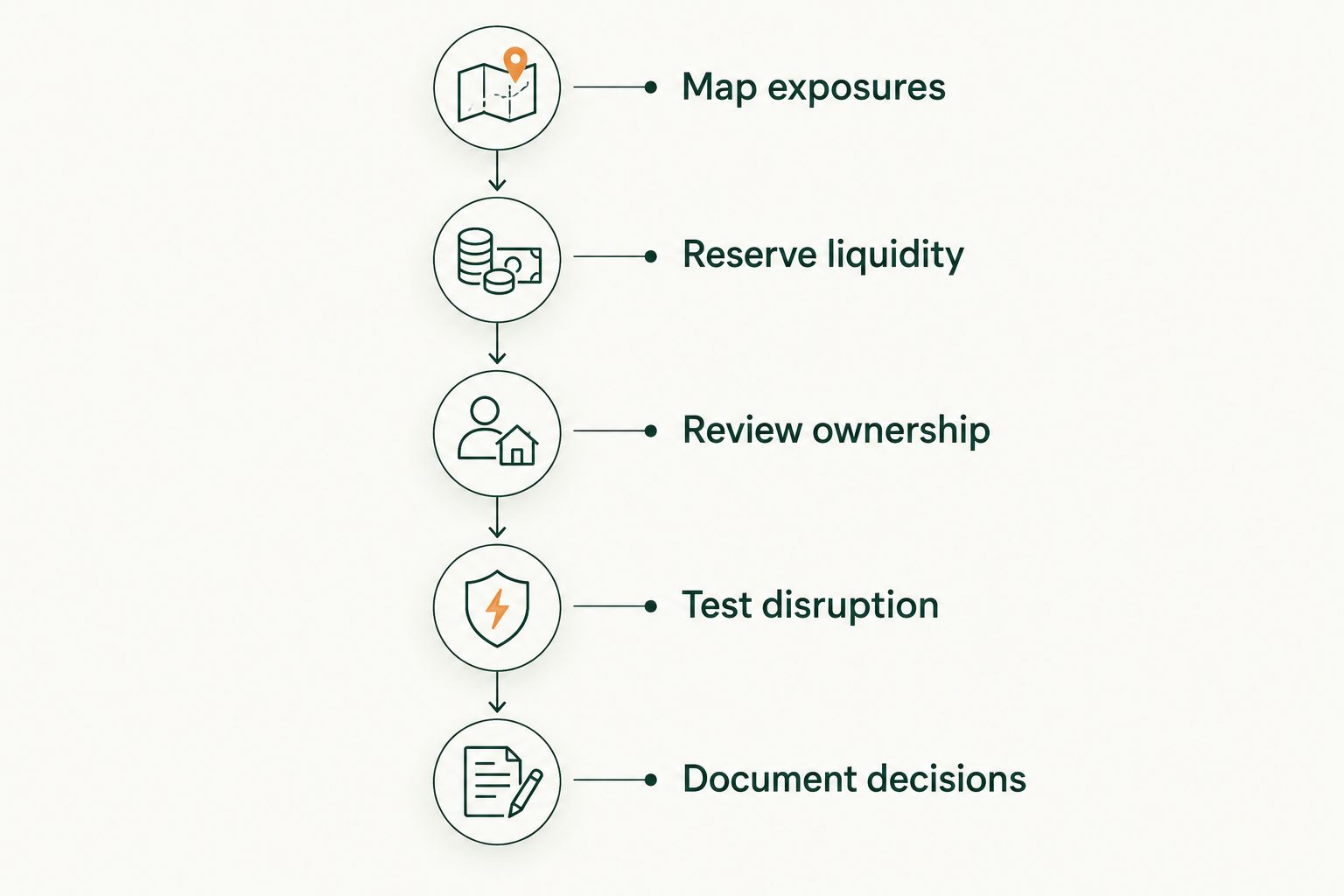
Before adding an alternative investment in 2026, follow this sequence. VIMNewEngland's integrated planning relationship connects these decisions with retirement, taxes, and estate planning rather than treating the investment as a separate purchase.
- Map exposures: Include public holdings, business equity, property, deferred compensation, and existing private funds.
- Reserve liquidity: Identify spending, tax payments, debt obligations, and potential capital calls before committing assets.
- Review ownership: Confirm the account, trust, or legal owner and the tax reporting that follows.
- Test disruption: Document what happens after a distribution stops, a redemption is restricted, or a family member dies.
- Document decisions: State the investment's purpose, acceptable risks, review triggers, and exit constraints.
The distinction between household needs and institutional capacity matters when comparing alternative investments for family offices. A household should not copy an allocation without comparing its staffing, cash needs, governance, and ability to fund commitments. An investment structure that works with dedicated administration can create an unreasonable burden for a family managing retirement withdrawals.
For a Massachusetts household, include property and estate administration in the liquidity review. An illiquid investment does not become easier to transfer or administer simply because its expected holding period extends beyond retirement. Coordinate that review with the principles in connecting your estate plan to your investment accounts.
Eligibility is not suitability
Under the SEC's individual accredited-investor framework applicable in 2026, qualifying financial tests include net worth exceeding $1 million, excluding the primary residence. Another route requires annual income exceeding $200,000 individually or $300,000 jointly in each of the prior two years, with a reasonable expectation of reaching the same level in the current year. Other qualifying routes exist.
These are eligibility tests, not investment recommendations. Different offerings apply different requirements, and meeting a threshold does not establish that your retirement plan can absorb a loss or a long withdrawal restriction.
Do not let eligibility substitute for a written suitability decision. Ask what the investment adds after expenses, taxes, overlapping exposures, and administrative work.
Which alternative investment should you choose?
Start with managed futures only if your unsolved problem is diversification; start with listed REIT funds if the goal is liquid property exposure. Private credit, private equity, infrastructure, and gold each need their own documented purpose.
Keeping your existing portfolio is also a valid decision. You do not need an alternative allocation merely because your assets qualify you to invest.
For a 2026 review, bring complete account statements, private-fund commitments, property information, and expected cash needs. Ask VIMNewEngland to connect the investment decision to the whole financial plan before discussing any particular vehicle.
FAQ
What's the best alternative investment for a high-net-worth portfolio?
The best choice depends on the portfolio problem you need to solve. Managed futures fit a diversification review, listed REIT funds address liquid property exposure, and private credit addresses lending income with additional credit and liquidity risks.
Are alternative investments safer than stocks?
Alternative investments are not inherently safer than stocks. Private valuations, withdrawal restrictions, borrowing, and concentrated exposures can obscure risks rather than eliminate them.
How much of my portfolio should go into alternatives?
There is no universally suitable allocation to alternatives. Set the allocation after accounting for spending needs, business ownership, property, taxes, and existing private commitments.
Do I need accredited-investor status to buy alternatives?
Accredited-investor status is not required for every alternative investment. Publicly traded REIT funds, gold funds, and certain managed futures funds provide access through public-market structures, while private offerings have their own eligibility rules.
Is private credit the same as owning bonds?
Private credit and bonds both involve lending, but their investment vehicles and terms differ. Compare borrower risk, lender protections, valuation practices, borrowing, and withdrawal rights rather than treating them as interchangeable.
Can alternative investments complicate estate planning?
Alternative investments can complicate estate planning when transfer restrictions, valuation requirements, or capital commitments affect administration. Review ownership and successor responsibilities with your advisor and estate attorney before investing.
Can a fee-only advisor help evaluate alternatives?
A fee-only advisor can evaluate how an alternative fits your overall financial plan. VIMNewEngland provides integrated financial planning and investment management; discuss the scope of any proposed investment review directly with the firm.
One last thing
A smoother statement is not necessarily a safer investment. Exchange-traded holdings show changing market prices frequently; private holdings depend on their stated valuation process. Comparing those statement patterns without examining underlying assets creates a misleading impression of stability.
Before committing, ask one practical question: Who will handle this investment if you cannot? If the answer requires knowledge only you possess, document the responsibilities and simplify where necessary. Personal attention should reduce the burden on your family, not leave them an unfamiliar collection of commitments.
This article is educational, not individualized investment, legal, or tax advice. Investments involve risk, including loss of principal.