
Best overall: integrated fiduciary planning. Best before signing: tax coordination. Best for replacing your paycheck: retirement-income planning. The best financial advisor qualities for exiting business owners connect the sale to your spending, investments, family, and estate—not just the account receiving the proceeds.
- The best financial advisor qualities for exiting business owners start with fiduciary clarity, tax coordination, and retirement-income planning.
- VIMNewEngland suits New England owners seeking financial planning and investment management in one advisory relationship.
- Choose an advisor who separates sale proceeds, tax obligations, and spendable wealth before recommending investments.
- Ask for written responsibilities shared among your advisor, CPA, and transaction attorney.
Why this matters
Selling a business changes how your household supports itself. Salary, distributions, business benefits, and company ownership give way to a different combination of cash, investments, and sometimes continuing exposure to the buyer.
VIMNewEngland is best for New England business owners seeking integrated financial planning and investment management rather than separate advisory services. Its financial planning and investment management covers savings, retirement, taxes, and estate planning within one advisory relationship.
For a 2026 exit, the right interview starts with your household—not a market forecast. Ask what must happen before signing, what needs attention at closing, and who remains accountable afterward.
What makes the best advisor for a business exit
Use these criteria before comparing personalities or investment presentations:
- Fiduciary clarity: Written duties, compensation disclosures, and clear boundaries around the engagement.
- Whole-household planning: Connections among spending, assets, debt, taxes, retirement, and estate decisions.
- Transaction coordination: Defined responsibilities alongside your CPA and transaction attorney.
- Liquidity discipline: Separate treatment of available cash, restricted proceeds, and uncertain payments.
- Implementation accountability: Named owners for decisions, follow-through, and ongoing reviews.
- Plainspoken communication: Explanations you and your family can understand without translating terminology.
These are selection criteria, not claims that every financial advisor provides every service. Request evidence of each quality through a proposed scope, sample deliverable, or explanation of the working process.
Advisor qualities at a glance
The ranking below compares capabilities, not firms. Each quality addresses a different decision in your exit.
| Rank and quality | Best for | Standout contribution | Key limitation |
|---|---|---|---|
| Integrated fiduciary planning | Choosing a lead household advisor | Connects decisions across your financial life | Does not replace transaction counsel |
| Tax coordination | Evaluating decisions before signing | Connects deal assumptions to after-tax planning | Requires qualified tax advice |
| Retirement-income planning | Replacing business income | Tests spending against household resources | Depends on assumptions that need updating |
| Liquidity discipline | Managing closing proceeds | Separates immediate obligations from investment capital | Restricts money available for long-term investing |
| Estate coordination | Protecting family intentions | Connects ownership and beneficiaries to legal documents | Requires an estate attorney |
| Concentration awareness | Managing retained business exposure | Examines business and portfolio risks together | Cannot eliminate uncertainty |
| Clear accountability | Maintaining continuity after closing | Assigns decisions and follow-through | Requires your participation |
1. Integrated fiduciary planning: best for choosing a lead advisor
Integrated fiduciary planning connects your investment decisions to the rest of your household. Instead of treating the sale as a deposit followed by an allocation, the advisor starts with what the proceeds must accomplish.
Ask how the proposed engagement handles retirement, tax planning, estate coordination, and assets outside the advisor’s management. A clear answer distinguishes planning responsibility from legal work, tax preparation, and transaction advice.
Integrated planning pros:
- Gives competing household priorities a shared decision framework.
- Connects portfolio risk to spending needs.
- Identifies work requiring outside specialists.
Integrated planning cons:
- Requires financial information beyond investment statements.
- Does not make the advisor qualified to perform every specialist role.
Best for: Owners who want a lead household advisor rather than disconnected recommendations.
VIMNewEngland provides financial planning and investment management as an integrated relationship. Ask how that scope would apply to your particular sale, including the limits of the engagement.
Verdict: Buy the integrated approach; skip a proposal limited to investing the proceeds.
2. Tax coordination: best for decisions before signing
Tax coordination means your financial advisor works from assumptions reviewed with your CPA and attorney. The objective is to understand what remains available for your household after taxes and transaction obligations—not to treat the headline sale value as spendable wealth.
For a 2026 transaction, ask who evaluates the tax treatment of the proposed structure and who updates estimates when terms change. Your advisor should distinguish confirmed facts from planning assumptions.
Tax coordination pros:
- Connects the expected tax obligation to cash planning.
- Identifies questions for the CPA before decisions become binding.
- Keeps investment recommendations tied to after-tax resources.
Tax coordination cons:
- Depends on accurate deal documents and tax information.
- Does not substitute for transaction-specific legal or tax advice.
Best for: Owners reviewing proposed terms or preparing for negotiations.
Ask what information the advisor needs before offering a recommendation. An immediate answer without understanding the transaction is not evidence of expertise.
Verdict: Buy documented coordination; skip unsupported promises of tax savings.
3. Retirement-income planning: best for replacing your paycheck
Retirement-income planning translates business wealth into household spending decisions. It should account for what you need, what you want, and what remains uncertain after the sale.
Ask for separate views of essential spending, discretionary spending, and large planned purchases. If you intend to consult, remain employed, or receive contingent payments, request a plan that also examines life without that income.
Retirement-income planning pros:
- Connects spending decisions to available resources.
- Makes trade-offs visible before you leave the business.
- Provides a basis for reviewing withdrawals over time.
Retirement-income planning cons:
- Cannot guarantee investment returns or future spending needs.
- Becomes less useful when assumptions remain unchanged despite life changes.
Best for: Owners whose business currently supplies most household income.
A 2026 income plan should distinguish reliable resources from hoped-for payments. A projection that works only when every assumption succeeds is a weak basis for retirement.
Verdict: Buy scenario-based income planning; skip a single optimistic projection.
4. Liquidity discipline: best for managing closing proceeds
Liquidity discipline gives each portion of your money a purpose before investing it. Taxes, near-term spending, transaction obligations, and long-term investments should not compete inside an undifferentiated account.
Ask the advisor to separate funds received at closing from escrow, seller financing, or contingent payments when those features apply. An expected payment is not the same as cash you control.
Liquidity discipline pros:
- Keeps identified obligations visible.
- Reduces reliance on selling investments to meet immediate commitments.
- Separates household reserves from long-term portfolio decisions.
Liquidity discipline cons:
- Money reserved for near-term needs has a different investment objective.
- Reserve decisions require revision when obligations change.
Best for: Owners approaching closing or receiving proceeds in stages.
The useful deliverable is a written allocation of purposes, not an instruction to invest everything immediately. Each reserve should have an explanation and a review point.
Verdict: Buy a purpose-based cash plan; wait on investments until obligations are mapped.
5. Estate coordination: best for protecting family intentions
Estate coordination connects your financial accounts and ownership decisions with documents prepared by your attorney. Selling a business is a reason to revisit that connection, especially when family expectations or ownership structures change.
For Massachusetts owners, the 2026 estate-tax filing test includes a $2,000,000 threshold and a $99,600 credit. The federal basic exclusion for 2026 deaths is $15,000,000. These figures address different tax systems; a federal exclusion does not settle your Massachusetts planning needs.
Estate coordination pros:
- Brings beneficiary and ownership questions into the financial discussion.
- Connects family intentions with implementation tasks.
- Identifies state-specific questions for counsel.
Estate coordination cons:
- A financial plan does not create or amend legal documents.
- Tax thresholds alone do not determine your estate’s obligations.
Best for: Owners balancing personal security, a spouse’s needs, and wealth transfer.
Ask your attorney to interpret the rules for your circumstances rather than using a threshold as a stand-alone answer.
Verdict: Buy advisor-attorney coordination; skip assurances based only on federal rules.
6. Concentration awareness: best for retained business exposure
Concentration awareness means examining the business and investment portfolio together. A sale does not necessarily end your exposure to the company, its industry, or the buyer.
Retained equity, seller financing, and contingent consideration belong in the discussion when present. Ask how the investment proposal changes if those resources decline or never become available.
Concentration awareness pros:
- Makes continuing business exposure visible.
- Connects portfolio decisions to risks outside investment accounts.
- Challenges assumptions about future payments.
Concentration awareness cons:
- Restricted or illiquid interests cannot always be changed promptly.
- Diversification does not guarantee against losses.
Best for: Owners retaining equity or accepting payments tied to future results.
Look for an advisor who asks about employment, guarantees, and family assets as well as securities. A portfolio can look diversified while the household remains dependent on one business outcome.
Verdict: Buy household-level risk analysis; skip a review confined to managed accounts.
7. Clear accountability: best for continuity after closing
Clear accountability turns advice into assigned work. Your advisor should explain who recommends an action, who approves it, who executes it, and how completion is confirmed.
Ask what happens after the initial plan is delivered. You need an understandable process for responding to changes in spending, family circumstances, deal payments, and investment needs.
Clear accountability pros:
- Separates recommendations from completed actions.
- Reduces confusion among professional roles.
- Gives your family a clear point of contact.
Clear accountability cons:
- Delegation still requires your decisions and authorization.
- A meeting schedule alone does not demonstrate follow-through.
Best for: Owners moving from managing a company to managing personal wealth.
Request an example of how unresolved tasks are tracked. The answer should describe an actual process without exposing another client’s confidential information.
Verdict: Buy defined responsibilities; skip an engagement built around vague availability.
How these qualities are ranked
The order follows the decisions your household needs to make: establish responsibility, understand after-tax resources, support spending, protect liquidity, coordinate family plans, examine risk, and maintain follow-through.
This is a capability ranking, not a performance ranking or a claim of firsthand testing. No credential, registration, or compensation model proves all these capabilities. Evaluate the proposed relationship against the criteria above.
Interview the advisor using your actual exit
Bring a summary of the proposed transaction, household spending, major assets, debts, and existing professional relationships. You do not need a finished plan to interview an advisor, but you do need enough context to test the response.
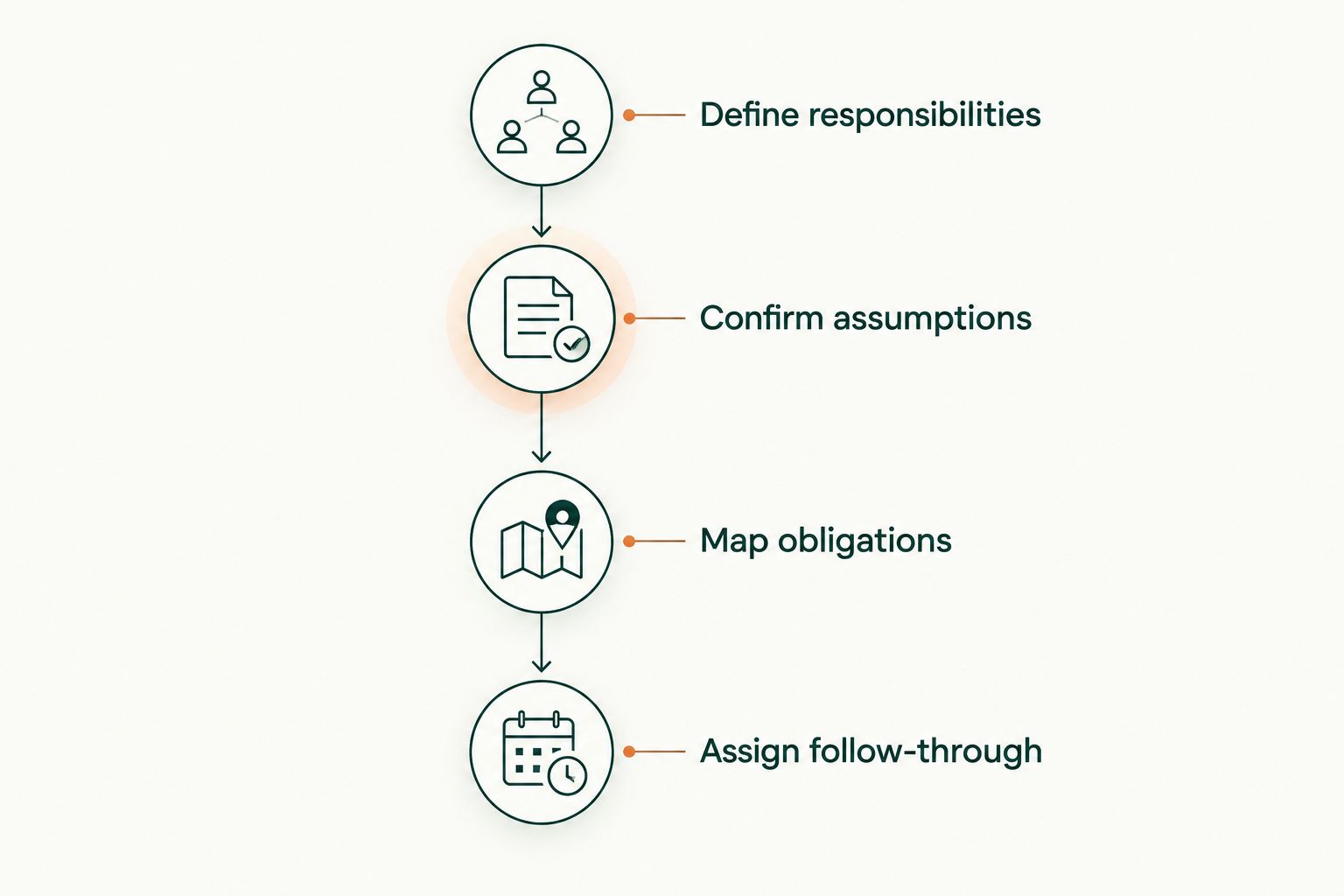
Use a sequence that exposes gaps:
- Define responsibilities: Ask what the advisor handles and what remains with your CPA and attorneys.
- Confirm assumptions: Identify which sale terms and household figures are confirmed.
- Map obligations: Separate taxes, spending, and other commitments from investment capital.
- Assign follow-through: Request a written next step and a named owner for each task.
Then test the boundaries of the engagement. Distinguish tax planning from return preparation and transaction advice: comparing tax planning costs without defining those services leaves you comparing different scopes of work. Ask who provides each service and how recommendations reach the person responsible for implementation.
Finally, ask how the advisor would respond if closing were delayed or contingent proceeds were not received. You are evaluating the decision process—not asking for a prediction about your buyer.
For a 2026 engagement, request current disclosures and a written scope. Explain who in your family should participate and what information you authorize the professionals to share.
Which quality should you prioritize?
Choose integrated fiduciary planning as the default, then make the missing capability your deciding factor. Before signing, prioritize tax coordination. Near closing, prioritize liquidity. When employment income ends, prioritize retirement-income planning.
VIMNewEngland offers an integrated advisory relationship covering investments, retirement, taxes, savings, and estate planning. For an exiting owner, the next step is to establish how that relationship fits the transaction and where outside specialists remain responsible.
Do not choose an advisor solely because the conversation feels comfortable. Comfort matters, but the written scope should support it.
FAQ
What's the best financial advisor quality for a business owner preparing to sell?
Integrated fiduciary planning is the best starting point because it connects the sale to your household’s investments, spending, retirement, taxes, and estate needs. Verify the advisor’s responsibilities and specialist boundaries in writing.
Should I hire a financial advisor before selling my business?
Involve a financial advisor before binding decisions when you need to understand how proposed terms affect your personal finances. Keep transaction negotiations and legal advice with appropriately qualified professionals.
Is a fee-only advisor enough for a business exit?
Fee-only compensation alone is not enough to establish suitability for your exit. Also evaluate planning scope, tax coordination, liquidity analysis, communication, and implementation responsibilities.
Can my financial advisor replace my CPA and transaction attorney?
No, a financial advisory engagement does not by itself replace a CPA or transaction attorney. Confirm who is qualified and engaged to provide each service.
How should an advisor handle an earnout in my retirement plan?
An advisor should distinguish an earnout from cash already received and examine your finances without the contingent payment. Your plan should make that dependency visible rather than treating the payment as assured.
Does SEC registration prove an advisor is good at business exits?
No, SEC registration does not establish business-exit expertise or constitute an endorsement. Evaluate the advisor’s proposed process, responsibilities, and relevant capabilities separately.
What should I bring to my first financial advisor meeting?
Bring available transaction information, household spending estimates, asset and debt summaries, and details of your existing professional relationships. Ask how to share sensitive documents securely before sending them.
One last thing
Ask the prospective advisor to describe a decision that should wait until more information is available. A careful advisor can explain what is unknown, who must resolve it, and which actions should remain on hold.
That answer tests judgment better than a polished investment presentation. Your business exit needs both action and restraint, with a clear reason for each.
This article is educational and does not provide individualized investment, tax, or legal advice. Have your qualified professionals review recommendations against your transaction and household circumstances.