
The essential questions to ask a financial advisor before hiring one in 2026 concern fiduciary duty, compensation, services, investment decisions, account access, and how the relationship ends. Ask for written answers and supporting documents; a reassuring conversation does not replace a clear agreement about who does what.
- Questions to ask a financial advisor should test fiduciary duty, total costs, planning scope, and account safeguards.
- Verify registration through SEC or state records; registration is not an endorsement of investment skill.
- VIMNewEngland offers financial planning and investment management within one advisory relationship.
- Choose an advisor whose written agreement matches the financial planning help you actually need.
Why this matters
You are hiring someone to influence decisions about savings, retirement, taxes, and your family's financial security. Investment performance alone cannot tell you whether that relationship fits your needs.
For your 2026 search, separate professional titles from actual responsibilities. Understanding how to know whether an advisor is truly a fiduciary helps you ask about the capacity in which the person will serve you, rather than accepting a label as proof.
A clear answer identifies the responsibility, the person accountable, and the document that confirms it. Apply that standard throughout the interview.
What questions should you ask a financial advisor before hiring one?
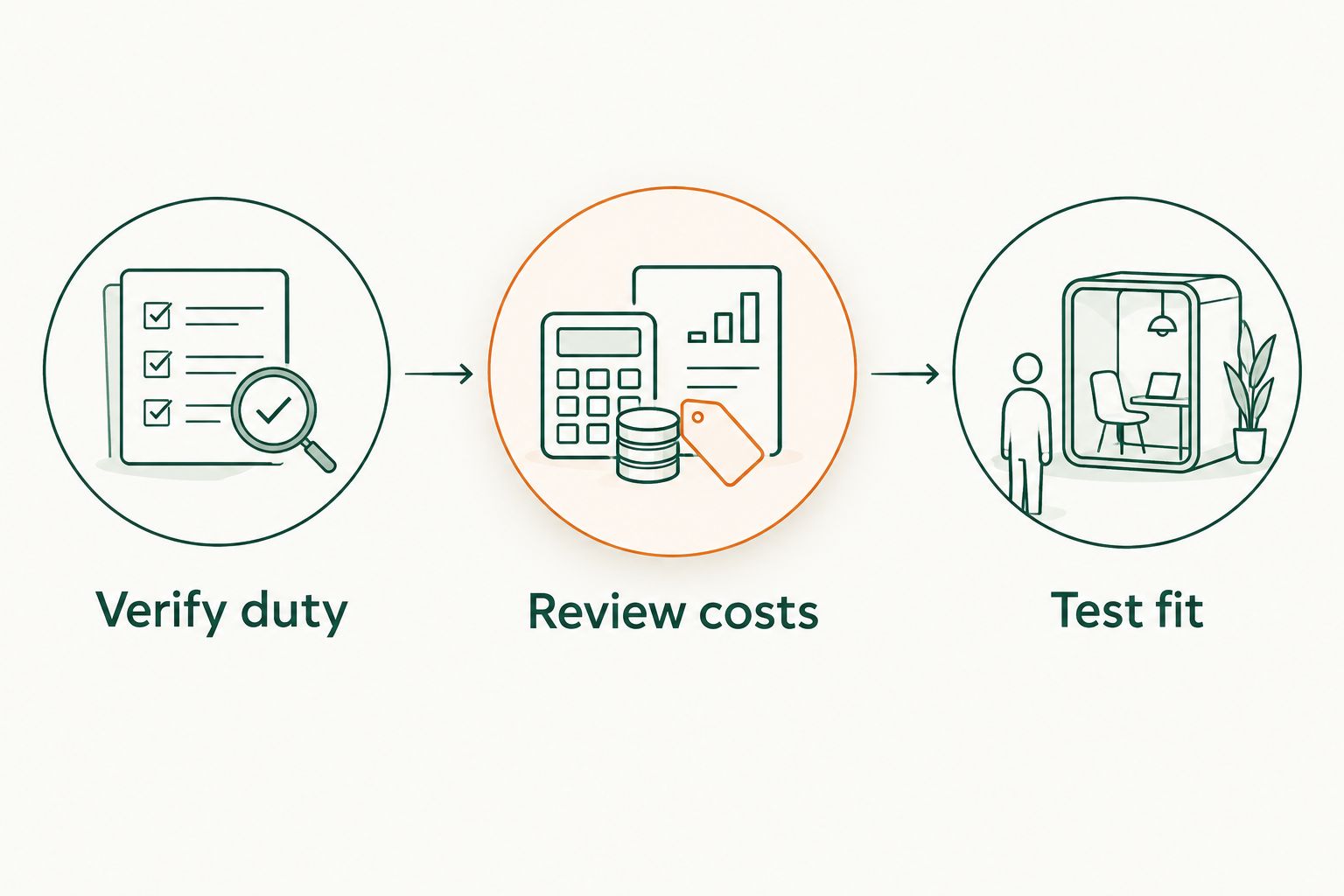
Use this sequence to move from basic qualifications to the working relationship. Ask the same core questions of every candidate so you can compare written answers rather than presentation styles.
- Verify duty. Establish fiduciary responsibilities, registration, compensation, and conflicts.
- Review costs. Identify the advisory charge, separate investment expenses, and services excluded from the agreement.
- Test fit. Examine planning scope, investment decisions, communication, account authority, and termination terms.
Will you act as a fiduciary throughout our advisory relationship?
Ask the advisor to explain the duty that applies to your engagement and to identify it in writing. If the person also acts as a broker or insurance agent, ask when those roles apply and how you will know which role governs a recommendation.
Listen for an explanation of conflicts, not a claim that conflicts never exist. Ask how the advisor identifies, discloses, and addresses incentives that differ from your interests.
Where can I verify your registration and background?
Request the advisor's legal name, firm name, and registration details. Use the SEC's Investment Adviser Public Disclosure system for investment adviser records and FINRA BrokerCheck when brokerage registration is relevant.
For a 2026 review, read current disclosures and examine any disciplinary information rather than relying on a biography. SEC registration does not mean the SEC approves an advisor's abilities or guarantees results.
How are you and your firm compensated?
Ask who pays the firm, what triggers compensation, and whether recommendations generate commissions or referral payments. Fee-only describes compensation from clients rather than product commissions; it does not eliminate every potential conflict.
Request a written explanation that covers the person giving advice and the firm receiving payment. If an advisor uses the term fee-based, ask specifically whether commissions are also part of the business.
What will I pay beyond your advisory charge?
Ask for a complete description of applicable expenses, including fund expenses, transaction charges, custody-related charges, and outside professional work. Have the advisor distinguish charges included in the engagement from expenses paid separately.
The useful answer is not simply that a charge is competitive. You need to know how it is calculated, when it is collected, and what would cause it to change.
What financial planning work is included?
Ask which decisions the advisor will help you make and what you will receive in writing. Retirement income, savings, investment management, tax planning, and estate coordination are different responsibilities, even when discussed together.
Ask what is excluded as directly as you ask what is included. A planning discussion does not automatically include tax-return preparation, legal drafting, or implementation of every recommendation.
Who will actually advise me?
Ask who leads your relationship, who handles investment decisions, and who responds when your primary contact is unavailable. Identify whether the person conducting the interview will remain involved after you become a client.
Request an explanation of how responsibilities are divided. Personal attention should mean that you know whom to contact and who owns the next action, not that every task depends on a single person.
How will you build and manage my investment portfolio?
Ask how the advisor connects your investments to spending needs, time horizon, taxes, and willingness to accept losses. Have the advisor explain how an investment policy is established and what would justify changing it.
An understandable process matters more than an impressive market forecast. Ask for a plain-language explanation of diversification, rebalancing, and how the advisor handles a concentrated holding or an account you cannot readily move.
How will you evaluate investments I already own?
Ask whether existing holdings will be reviewed before any sales or transfers are recommended. The explanation should address taxable gains, investment expenses, restrictions, and the purpose each holding serves.
A recommendation to consolidate accounts deserves its own reasoning. Ask what you gain, what you give up, and whether leaving an account where it is would still allow effective planning.
What access will you have to my accounts?
Ask where assets will be held and which permissions you would authorize. Distinguish viewing information, placing trades, deducting agreed advisory charges, and moving money; these are not interchangeable permissions.
Request an explanation of how statements reach you and how you can verify account activity independently. Do not treat a request for personal login credentials as equivalent to a documented authorization process.
How will we measure progress?
Ask which outcomes the advisor will review beyond investment returns. Depending on your goals, the discussion can include retirement readiness, cash reserves, withdrawal decisions, beneficiary updates, and completion of planning actions.
Have the advisor explain how changes in your circumstances reach the plan. A report showing portfolio performance does not, by itself, demonstrate that your broader financial decisions remain coordinated.
When will we communicate, and what happens between reviews?
Ask what prompts a scheduled review and how questions are handled between meetings. Clarify who follows up when you send documents, raise a concern, or report a major life change.
There is no need to demand constant contact. You need an agreed process that matches the decisions you expect help with and makes unfinished work visible.
How can I end the relationship?
Ask about notice requirements, termination provisions, account-transfer procedures, and treatment of charges already collected. Confirm whether any investments have separate restrictions that remain after the advisory agreement ends.
Read the exit terms before signing, not after a disagreement. An advisor should be able to explain termination without treating the question as a lack of trust.
How do advisor compensation models compare?
In 2026, compare compensation arrangements by what creates the obligation to pay and what work the agreement includes. The label alone does not establish value or determine whether a particular recommendation serves you.
| Arrangement | Best for | Main advantage | Main limitation | Interview question |
|---|---|---|---|---|
| Ongoing asset-based engagement | Investors seeking continuing portfolio oversight | Links an ongoing engagement to assets under management | The advisory charge can increase as managed assets grow | Which assets count, and what planning work is included? |
| Flat-fee planning engagement | Households seeking a defined planning scope | Separates the planning charge from portfolio size | Implementation and continuing updates depend on the contract | What deliverables and follow-up are included? |
| Hourly planning engagement | People with a focused decision or limited scope | Lets you define a specific assignment | Additional work requires additional time | What work falls within the agreed scope? |
| Commission-based arrangement | Buyers evaluating a specific financial product | Compensation attaches to a product transaction | Product compensation creates incentives to examine carefully | What compensation does this recommendation generate? |
Fee-only and asset-based are not opposites: a fee-only firm can use an asset-based arrangement. Likewise, a flat charge does not establish that every service you need is included.
Why the right advisor relationship varies
The strongest interview questions reflect the decisions you face, not just a generic checklist. These factors change what you should examine:
- Retirement decisions: Ask how spending, withdrawals, and investment risk will be considered together.
- Tax complexity: Ask how recommendations reach your tax preparer before implementation.
- Estate responsibilities: Ask how account ownership and beneficiary decisions connect with legal documents.
- Business ownership: Ask how business interests and personal finances enter the planning conversation.
- Existing accounts: Ask how the advisor evaluates holdings that remain outside direct management.
- Family involvement: Ask who can attend meetings and what permissions are needed to share information.
A longer service list is not automatically better. Prioritize the responsibilities that matter to your household and require a clear owner for each.
How will you work with my CPA and estate attorney?
Coordination needs a process, not a promise that professionals can speak when necessary. Ask who requests information, obtains your permission to share it, and confirms that an agreed action was completed.
For a business owner, tax planning with a CPA belongs in the decision process before an investment sale, retirement contribution, or ownership transaction is implemented. Ask the prospective advisor how the CPA's tax analysis will inform the financial recommendation.
Estate work needs similarly clear boundaries. Ask whether the advisor reviews beneficiary designations and account ownership, while your attorney handles legal advice and document drafting; do not assume that discussing estate planning includes legal services.
A practical interview question is: who follows up if the financial plan recommends an action that another professional must complete? The answer should identify a handoff and a method for tracking completion.
What should you bring to an advisor interview?
For your 2026 interviews, write down 2 priorities and assemble 3 document groups: account statements, tax information, and existing planning documents. This is a preparation checklist, not a requirement to disclose sensitive records before you understand the firm's information-handling process.
Describe the decisions creating the most uncertainty. You might need a retirement spending plan, a coordinated approach to inherited assets, or clarity about how a business affects personal savings.
Ask each candidate to explain the next planning step using your situation. A specific explanation reveals more than asking whether the firm provides personalized service.
Where does VIMNewEngland fit?
VIMNewEngland is best suited to New England individuals, families, and business owners seeking integrated financial planning and investment management. The firm is a fee-only, SEC-registered RIA whose stated planning scope covers savings, retirement, taxes, and estate planning within one advisory relationship.
That integrated scope is relevant when your decisions affect one another. It does not establish that tax-return preparation or legal drafting is included, and fee-only compensation does not remove the need to examine charges and conflicts.
When considering VIMNewEngland, ask Rusty Tredwell how your priorities would shape the engagement, what work the agreement includes, and how outside professionals would participate. Confirm the actual terms rather than inferring them from a service description.
FAQ
What's the first question I should ask a financial advisor?
Ask whether the advisor will act as a fiduciary throughout your advisory relationship and where that responsibility appears in writing. Follow up by asking about compensation and conflicts.
Is a fee-only financial advisor always the right choice?
Fee-only compensation is not enough by itself to establish the right fit. Compare planning scope, total expenses, conflicts, account authority, and the people responsible for your relationship.
How many financial advisors should I interview?
Interview at least 2 financial advisors using the same core questions as a practical comparison exercise. Compare their written explanations rather than relying on how comfortable the introductory conversation feels.
Does SEC registration mean an advisor is approved by the government?
SEC registration does not mean the government approves an advisor's investment skill or guarantees results. Review registration records, disclosures, and relevant disciplinary information separately.
Can a financial advisor handle my taxes and estate documents?
Tax planning and estate coordination do not automatically include tax-return preparation or legal drafting. Ask which services the advisor provides and which require a CPA or attorney.
What should I ask VIMNewEngland before becoming a client?
Ask VIMNewEngland how its integrated planning and investment management relationship would address your priorities. Request written details about services, compensation, account authority, communication, and termination.
One last thing
Before making your 2026 hiring decision, ask: what would make your firm the wrong fit for me? A substantive answer reveals service boundaries and helps you judge whether the advisor understands the work you need.
Do not sign while a material question remains unanswered. Keep the agreement, disclosures, and written explanations together so the relationship starts with shared expectations.