
Yes, an estate planning advisor can coordinate with your attorney, with your permission, to connect your financial accounts, beneficiary choices, and wealth-transfer goals to your legal estate plan. The advisor handles financial planning and implementation within the agreed scope; your attorney provides legal advice and drafts the documents, so coordination does not replace legal representation.
- Can an estate planning advisor coordinate with your attorney? Yes, with your permission and clearly assigned responsibilities.
- Your attorney directs legal drafting; your financial advisor connects estate planning decisions to accounts, investments, and retirement needs.
- VIMNewEngland suits families seeking estate planning within an integrated financial planning and investment management relationship.
- Finish with verified account changes, not just signed documents or a meeting summary.
Can an estate planning advisor coordinate with your attorney?
Yes. Effective coordination follows a defined sequence rather than an informal promise to stay in touch. For the broader role of an advisor, see how a financial advisor can help with estate planning.
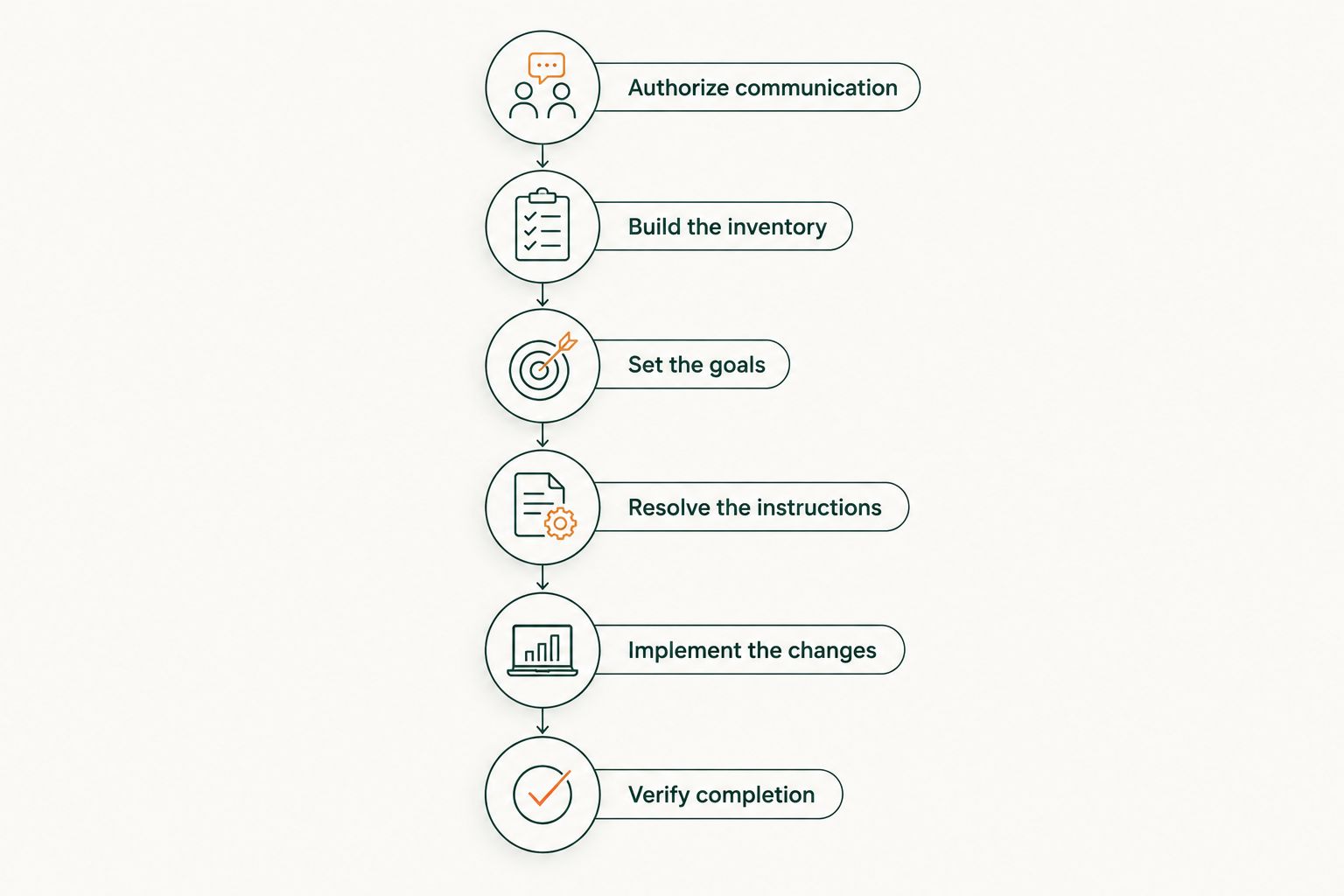
- Authorize communication. Agree on who can exchange information and what information they need.
- Build the inventory. Identify assets, ownership, beneficiaries, liabilities, and existing legal documents.
- Set the goals. Explain whom you want to benefit, who should act for you, and what financial needs come first.
- Resolve the instructions. Have your attorney explain the legal structure and your advisor assess its financial implications.
- Implement the changes. Complete the appropriate account, beneficiary, and ownership paperwork under the relevant instructions.
- Verify completion. Check accepted forms and account records against the approved plan.
For your 2026 estate review, ask for a written action list showing the responsible person and evidence needed to close each task. A discussion alone does not establish that an account change took effect.
Why this matters
Your estate documents and your financial accounts perform different jobs. An attorney can draft a trust, but signing the trust document does not automatically transfer every asset into it. Account ownership and beneficiary designations need their own review.
That distinction matters when you have retirement accounts, taxable investments, real estate, or business interests. Each asset brings different administrative requirements and legal questions. The goal is agreement between your intentions, your documents, and the records controlling each asset.
You should not have to translate legal instructions into investment decisions alone. A coordinated relationship gives each professional the information needed to identify conflicts without asking either professional to work outside their role.
Who handles each part of your estate plan?
A financial advisor and an estate attorney are complementary, not interchangeable. Use this division of responsibilities to understand what you are buying and where a separate professional remains necessary.
| Professional | Best for | Contribution | Limit or trade-off |
|---|---|---|---|
| Estate planning attorney | Legal structure and enforceable documents | Advises on applicable law, drafts documents, and directs legal ownership questions | Legal drafting alone does not complete investment-account changes |
| Financial advisor | Connecting estate goals to your financial life | Organizes financial information, evaluates investment and retirement implications, and helps track agreed account actions | Financial planning does not substitute for legal advice or document drafting |
| Tax professional | Tax reporting and transaction-specific tax questions | Evaluates tax treatment, filing responsibilities, and records needed for reporting | Tax analysis does not replace estate documents or account implementation |
Confirm the actual scope in each engagement agreement. Professional titles alone do not establish who will submit forms, monitor outstanding tasks, or review records after changes.
For a 2026 review, ask the advisor and attorney to identify the handoff points explicitly. If both professionals assume the other person is checking beneficiary confirmations, that task can remain unfinished.
What should you share before the joint discussion?
Give your professionals enough information to understand the whole financial picture without distributing unnecessary sensitive records. Start with an asset list that identifies each account or property, its owner, and its intended purpose.
Include these categories where relevant:
- Account records: Current statements and beneficiary confirmations, shared securely.
- Legal documents: Existing wills, trusts, powers of attorney, and related amendments.
- Family priorities: Intended recipients, dependents, and concerns about decision-making or access to funds.
- Financial commitments: Retirement spending, liabilities, planned gifts, and support for family members.
- Other interests: Real estate, business ownership, insurance, and charitable intentions.
Separate what you know from what needs verification. A family recollection about an account beneficiary is not a substitute for the custodian's current record.
Ask your attorney which communications should remain directly between you and counsel. Including another professional in a discussion can affect confidentiality and privilege; your attorney should determine how to structure that exchange.
How does advisor–attorney coordination work in practice?
The most useful workflow connects decisions to completed records. Before your 2026 meeting, agree on a common asset inventory and a secure way to exchange the approved information.
Authorize communication
Tell each professional who is participating and what you permit them to share. Establish who receives meeting notes and who contacts you when a decision requires approval. Permission to discuss your plan is not permission to make every change without you.
Build the inventory
Your advisor can help organize the financial picture within the engagement's scope. Your attorney uses that information to assess legal ownership, estate documents, and proposed arrangements. Include assets held outside the advisor's management rather than treating the managed portfolio as your entire estate.
Set the goals
State the outcomes you want before discussing structures. You might want to support a surviving spouse, preserve your retirement resources, provide for children, or transfer a business interest. These goals can compete; identifying the priorities helps your professionals explain the trade-offs.
Resolve the instructions
Your attorney specifies the legal requirements and recommended structure. Your advisor evaluates how proposed changes interact with liquidity, investments, retirement income, and other financial commitments. Refer transaction-specific tax questions to the appropriate tax professional before implementing the decision.
Implement the changes
Assign each form or instruction to a named person. Account custodians, insurers, lenders, and other institutions can have their own requirements. Do not assume the advisor can complete legal transfers, submit every form, or act for an institution outside the advisory relationship.
Verify completion
Collect confirmations and compare the resulting records with the attorney's instructions. Record unresolved items separately. An action is complete when the relevant institution or professional confirms the required result—not when someone sends an email requesting it.
Why the coordination process varies
The work depends on the assets and decisions involved, not simply on the length of your estate documents. These factors determine which professionals need to participate and what must be checked:
- Ownership structure: Individually owned, jointly owned, and trust-owned assets raise different implementation questions.
- Beneficiary arrangements: Direct beneficiary designations need review alongside the intended estate distribution.
- Retirement needs: A proposed gift or transfer must be considered alongside your own spending and liquidity requirements.
- Business interests: Ownership agreements and succession decisions need review beyond a brokerage account checklist.
- Property location: Assets in different states can introduce additional legal questions for your attorney.
- Family circumstances: Marriage, divorce, dependents, and intended recipients affect the decisions your professionals must address.
Do not use a generic timeline as proof that your plan is finished. Ask what remains outstanding and what evidence will establish completion. A short checklist with clear ownership is more useful than a broad assurance that everything is being handled.
Can your advisor change beneficiaries without your attorney?
Your advisor can help with beneficiary paperwork within the authorized scope, but legal questions about whom to name belong with your attorney. You still need to approve the instruction and meet the account institution's requirements.
A beneficiary designation can control the transfer of an account independently of instructions in a will, subject to applicable law and account rules. That makes alignment essential. Ask your attorney to review legal implications before naming a trust, addressing a blended family, or changing a designation connected to a divorce.
For your 2026 review, obtain current beneficiary confirmations rather than relying on an old application. Review primary and contingent beneficiaries, and bring discrepancies to your professionals before submitting changes.
Does your financial advisor need to be your trustee?
No. Coordinating estate planning, managing investments held in a trust, and serving as trustee are different responsibilities. An advisor's participation in planning does not establish authority to act as trustee.
The trustee acts under the trust document and applicable law. An investment advisor's role depends on the advisory agreement and the authority granted by the appropriate parties. Your attorney should explain who holds decision-making authority and how the roles interact.
Best for families seeking coordination: Keep the advisory role clearly defined, then choose a trustee through a separate legal and practical review. This preserves clarity, but it also requires explicit communication between the trustee, attorney, and advisor.
What should you ask before choosing a coordinating advisor?
Ask how the advisor handles estate planning discussions with outside counsel. You are looking for a clear process, not an assurance that every professional will automatically stay informed.
Useful questions include:
- Who prepares the financial inventory for the attorney?
- Which implementation tasks are included in the advisory agreement?
- Who checks account ownership and beneficiary confirmations?
- How are legal and tax questions referred to the appropriate professional?
- How are decisions, approvals, and outstanding actions recorded?
- What happens when an asset sits outside the advisor's management?
A strong answer names responsibilities and boundaries. An advisor who promises to handle everything without explaining those limits leaves you unable to assess what remains your responsibility.
VIMNewEngland provides fee-only financial planning and investment management that includes savings, retirement, taxes, and estate planning in an integrated advisory relationship. VIMNewEngland is best for individuals and families seeking estate planning within an integrated financial planning and investment management relationship.
That model connects estate goals to the wider financial plan; it does not replace your attorney. Before engaging VIMNewEngland, confirm the attorney-coordination scope, implementation responsibilities, and handling of assets outside the advisory relationship.
Discuss your estate planning priorities
Ask how estate planning fits your financial plan and what coordination with your attorney includes.
FAQ
Can an estate planning advisor coordinate with your attorney?
Yes, an estate planning advisor can coordinate with your attorney with your permission and an agreed scope. Your advisor connects financial decisions to the plan, while your attorney provides legal advice and drafts documents.
Do I still need an estate attorney if I have a financial advisor?
Yes, a financial advisor does not replace an estate attorney for legal advice and document drafting. Use the advisor for financial planning and implementation support within the advisory agreement.
Can my financial advisor draft my will or trust?
An advisory relationship alone does not authorize a financial advisor to provide legal advice or draft estate documents. Have an appropriately licensed attorney handle that work.
Should my attorney and advisor review beneficiary designations together?
Yes, a joint review helps connect beneficiary choices to your legal intentions and financial plan. Obtain current confirmations from the account institution and have your attorney address legal questions before changes.
Does signing a trust move my investment accounts into it?
No, signing a trust document does not automatically transfer your investment accounts into the trust. Follow your attorney's instructions and the account institution's requirements for any appropriate ownership changes.
What should I bring to an estate planning coordination meeting in 2026?
Bring current account records, beneficiary confirmations, existing estate documents, and a list of your goals and financial commitments. Ask the professionals how to share sensitive information securely before sending it.
Can VIMNewEngland replace my estate planning lawyer?
No, VIMNewEngland's financial planning and investment management relationship does not replace legal representation. Keep your estate attorney responsible for legal advice and confirm the advisor's coordination responsibilities separately.
One last thing
Ask for the confirmation, not just the checklist. A completed task list can record that paperwork was submitted while the account still reflects the previous instruction. Request the resulting ownership or beneficiary record and have the appropriate professional resolve any difference.
For your 2026 estate review, keep those confirmations with the action list so your next discussion starts from verified facts. This article provides general educational information, not individualized legal or tax advice.