
Best overall: documented fiduciary accountability. Best for retirement decisions: cash-flow planning. Best for inherited wealth: estate coordination. The best financial advisor qualities for Marblehead families combine these strengths with transparent compensation, tax-aware investing, and a relationship that connects the whole household’s finances.
- The best financial advisor qualities for Marblehead families start with fiduciary accountability and clear compensation.
- VIMNewEngland fits families seeking fee-only financial planning and investment management within one advisory relationship.
- Massachusetts estate exposure deserves attention even when an estate falls below the federal exclusion.
- Choose an advisor who explains trade-offs, documents responsibilities, and coordinates with your tax and legal professionals.
Why this matters for Marblehead families
An investment portfolio is only part of your financial life. Retirement accounts, property, business interests, taxes, and family responsibilities create decisions that need to work together.
For your 2026 advisor search, separate a reassuring conversation from evidence of a working process. A strong candidate should explain who makes decisions, what the engagement covers, and how recommendations change when your circumstances change.
VIMNewEngland is a fit for Marblehead families seeking fee-only financial planning and investment management in one advisory relationship. The firm’s financial planning and investment management approach covers savings, retirement, taxes, and estate planning rather than treating each as an unrelated assignment.
The ranking below compares qualities, not competing firms. Use it to identify what your family needs and what an advisor must demonstrate before you sign.
What makes the best financial advisor for your family?
Use these criteria before comparing personalities or investment presentations:
- Accountability: The advisor explains fiduciary responsibilities and discloses conflicts in writing.
- Compensation clarity: You understand how the advisor is paid and which services the agreement includes.
- Planning connections: Investment recommendations reflect spending needs, taxes, and estate intentions.
- Practical execution: Recommendations identify a responsible person and a next action.
- Relationship fit: Both partners can ask questions and understand the answers.
- Professional boundaries: The advisor distinguishes financial planning from legal advice and tax preparation.
No single credential or compensation model proves every criterion. Ask for evidence of each, and distinguish what the advisor personally handles from work assigned to another professional.
Financial advisor qualities at a glance
| Rank and quality | Best for | Standout evidence | Key limitation |
|---|---|---|---|
| 1. Fiduciary accountability | Establishing trust | Written duties and conflict disclosures | Fiduciary status does not guarantee results |
| 2. Fee-only transparency | Understanding incentives | Clear compensation and service scope | Fee-only does not eliminate every conflict |
| 3. Cash-flow planning | Retirement decisions | Spending needs connected to investment withdrawals | Projections depend on assumptions |
| 4. Estate coordination | Inheritance and family continuity | Account ownership aligned with legal intentions | An advisor does not replace an estate attorney |
| 5. Tax-aware investing | Managing taxable wealth | Investment decisions reviewed for tax consequences | Tax savings are not the only objective |
| 6. Clear relationship ownership | Keeping plans current | Named responsibilities and understandable follow-up | Personal attention alone does not prove technical skill |
1. Fiduciary accountability: best for establishing trust
Fiduciary accountability means the advisor’s obligations are more than a description in a brochure. You should understand when the advisor acts as a fiduciary, which services that duty covers, and how conflicts are addressed.
Ask for the advisory agreement and relevant disclosures before committing. SEC registration is a regulatory status, not an endorsement of an advisor’s skill or investment recommendations.
Fiduciary accountability pros:
- Gives you a clear standard for evaluating advice.
- Makes conflict disclosure part of the conversation.
- Helps distinguish advisory responsibilities from sales language.
Fiduciary accountability cons:
- Does not prevent investment losses.
- Requires you to review disclosures rather than rely on a title.
Best for: Families establishing a new advisory relationship or reassessing an existing one.
Ask the candidate to describe a conflict that exists in the proposed engagement and how it is managed. An answer that acknowledges a real trade-off is more informative than a claim that no conflicts exist.
For a 2026 search, request current documents rather than relying on an old introduction or referral.
Verdict: Buy into documented fiduciary accountability; skip assurances without a clear written scope.
2. Fee-only transparency: best for understanding incentives
Fee-only describes compensation, not the full quality of advice. It helps you examine incentives, but you still need to understand the engagement’s scope and any separate expenses associated with your accounts.
VIMNewEngland provides fee-only financial planning and investment management. Ask how that integrated relationship would apply to your household, including which tasks remain with your accountant or attorney.
Fee-only transparency pros:
- Clarifies the advisor’s compensation model.
- Creates a direct conversation about service scope.
- Helps you compare proposals on more than a headline fee.
Fee-only transparency cons:
- Does not remove all conflicts of interest.
- Does not establish whether your planning needs are included.
Best for: Families who want to understand how the advisor’s business model relates to recommendations.
Ask whether advice about debt repayment, assets outside the advisor’s management, or a major gift changes the engagement. These questions reveal boundaries before a consequential decision arrives.
Verdict: Buy clarity about compensation and responsibilities; hold when explanations remain vague.
3. Cash-flow planning: best for retirement decisions
Retirement planning should connect what you spend with where the money comes from. An investment allocation alone does not answer which accounts should support living expenses or how a large withdrawal affects the rest of your plan.
Bring 12 months of spending records to your planning conversation. Separate recurring needs from irregular commitments, such as property work, family support, or a planned gift.
Cash-flow planning pros:
- Connects portfolio decisions to household spending.
- Makes withdrawal choices easier to discuss.
- Exposes assumptions that deserve closer review.
Cash-flow planning cons:
- Depends on accurate information from your household.
- Cannot make future returns or expenses certain.
Best for: Families approaching retirement, reducing work, or replacing employment income.
For your 2026 retirement review, ask the advisor to show how the plan responds to lower investment returns or an unexpected expense. The value lies in understanding available choices, not presenting a projection as a promise.
Verdict: Buy a spending-led retirement process; skip return forecasts presented as a retirement plan.
4. Estate coordination: best for inheritance and family continuity
Estate coordination connects your financial accounts with the intentions documented by your attorney. It includes reviewing ownership, beneficiary designations, liquidity needs, and responsibilities when someone dies or becomes unable to manage finances.
Massachusetts deserves explicit attention. For 2026, the Massachusetts estate-tax filing test uses a $2,000,000 threshold, while the federal basic exclusion is $15,000,000 for 2026 deaths. A family below the federal exclusion should not assume Massachusetts estate-tax questions disappear; filing requirements depend on the applicable rules and estate facts.
Estate coordination pros:
- Brings account details into the estate discussion.
- Identifies implementation tasks after documents are signed.
- Clarifies which questions belong with your attorney.
Estate coordination cons:
- Does not replace legal drafting or legal advice.
- Requires follow-through from account owners and other professionals.
Best for: Families with inheritance concerns, trusts, business interests, or property ownership questions.
A signed trust document and completed account changes are different milestones. The practical work of funding a revocable living trust involves aligning appropriate assets with the trust under legal guidance; retirement-account ownership and beneficiary decisions require separate review rather than automatic retitling.
Verdict: Buy coordination with your estate attorney; skip the assumption that signed documents finish the job.
5. Tax-aware investing: best for managing taxable wealth
Tax-aware investing considers the tax consequences of portfolio decisions alongside risk, diversification, and spending needs. It does not mean avoiding every taxable sale or choosing an investment solely because of its tax treatment.
Ask how the advisor evaluates a concentrated holding, a charitable gift, or a withdrawal spanning different account types. The explanation should connect the investment decision with your broader plan and identify where your tax professional needs to participate.
Tax-aware investing pros:
- Makes tax consequences visible before transactions.
- Connects portfolio changes with household goals.
- Encourages coordination with your tax professional.
Tax-aware investing cons:
- Cannot guarantee a particular tax outcome.
- Requires current information about income and account holdings.
Best for: Families with taxable investments, appreciated assets, or changing income.
A strong answer explains why a transaction makes sense after considering its trade-offs. Avoiding a tax bill is not enough if the decision leaves your family with an unsuitable concentration or insufficient spending money.
Verdict: Buy an explanation of investment and tax trade-offs; skip tax savings presented without context.
6. Clear relationship ownership: best for keeping plans current
A financial plan needs someone responsible for keeping decisions connected. You should know whom to contact, how changes reach the advisor, and who follows up when a recommendation involves another professional.
Personal attention matters most when it produces understandable decisions. Ask how the advisor includes a less-involved spouse or prepares a family member to take over financial responsibilities.
Clear relationship ownership pros:
- Reduces uncertainty about who handles each task.
- Gives both partners a place in the discussion.
- Makes unfinished recommendations easier to identify.
Clear relationship ownership cons:
- A comfortable relationship does not prove technical competence.
- Follow-through still depends on your participation.
Best for: Busy households and families seeking continuity through retirement, illness, or bereavement.
At VIMNewEngland, ask Rusty Tredwell how the proposed relationship would connect your planning priorities with investment management. Request a concrete explanation of responsibilities rather than assuming a particular meeting schedule or service promise.
Verdict: Buy clear ownership and understandable communication; hold when friendliness substitutes for a defined process.
How these qualities are ranked
Fiduciary accountability comes first because you need to understand whose interests the advice serves. Compensation transparency follows because incentives and service boundaries affect how you evaluate recommendations.
The remaining qualities address distinct household decisions: retirement spending, estate implementation, taxable investments, and ongoing responsibility. This is a decision framework, not a performance ranking or a claim that any advisor guarantees better outcomes.
Turn the comparison into a working plan
Use the same questions with every candidate. Describe your household’s most important unresolved decision, then ask the advisor to explain the process for addressing it without jumping straight to an investment recommendation.
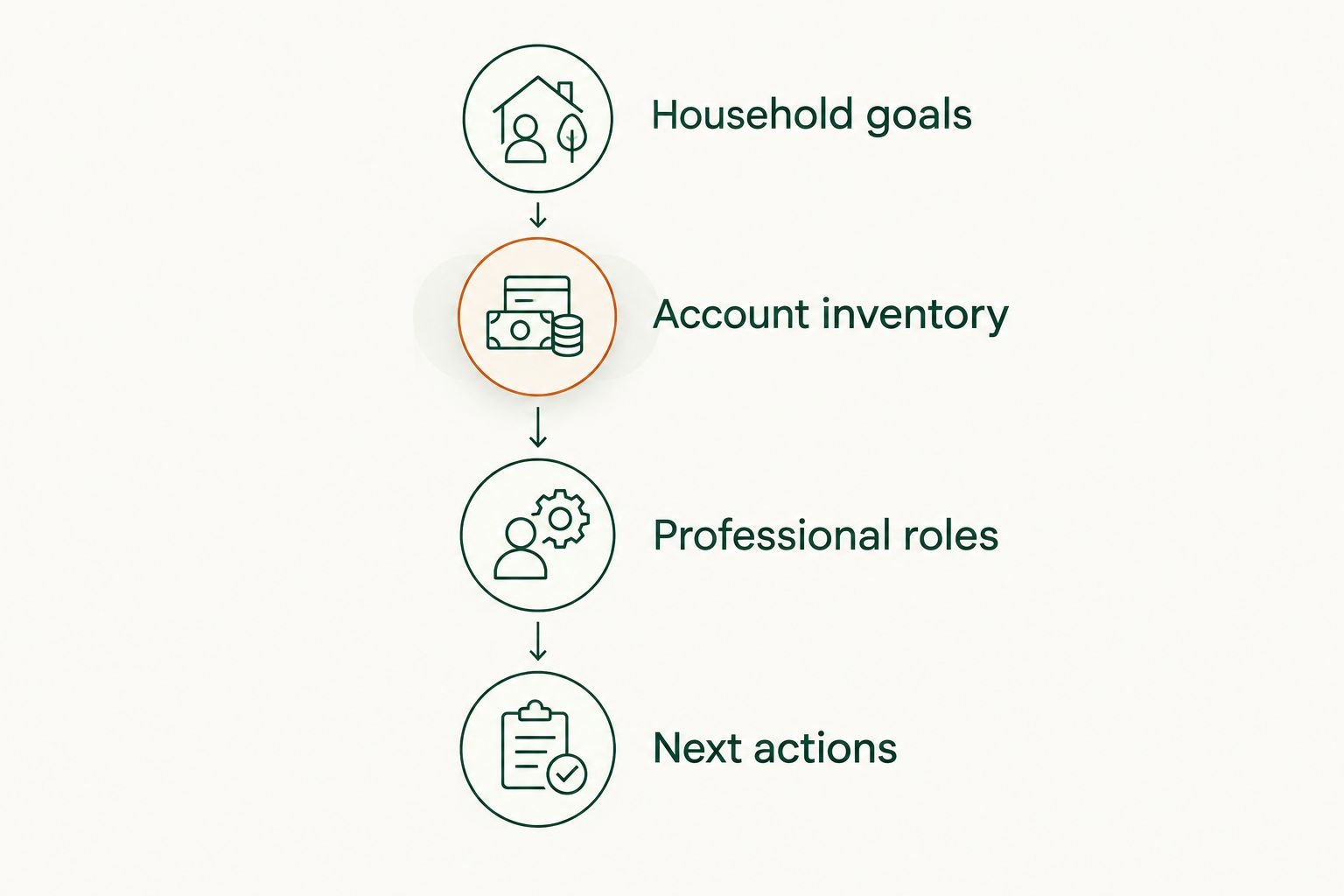
Organize the answer under these headings:
- Household goals: What decision needs to be made?
- Account inventory: What information is needed?
- Professional roles: Who provides financial, tax, and legal advice?
- Next actions: What happens after the meeting?
These headings turn an agreeable conversation into something you can evaluate. You are looking for a connection between the problem, the information, and the person responsible for action.
Which qualities should your family prioritize?
Start with fiduciary accountability and transparent compensation, then choose the planning strength that addresses your family’s most consequential decision. Retirement timing calls for cash-flow work; inheritance concerns call for estate coordination; appreciated holdings call for investment and tax coordination.
VIMNewEngland’s integrated advisory services fit families seeking financial planning and investment management together. Confirm the proposed scope against your needs rather than treating a firm description as a substitute for an agreement.
For your 2026 shortlist, favor the advisor who explains the work plainly and identifies its limits. You should leave knowing what happens next, not simply feeling impressed.
FAQ
What's the most important financial advisor quality for Marblehead families?
Documented fiduciary accountability comes first. Ask which services the duty covers, how conflicts are disclosed, and where those responsibilities appear in the advisory agreement.
Is a fee-only financial advisor automatically the best choice?
Fee-only compensation does not establish every part of an advisor's suitability. You still need clear service boundaries, relevant planning capabilities, and a relationship that works for your household.
Does SEC registration mean an advisor's recommendations are approved?
No. SEC registration is a regulatory status, not an endorsement of an advisor's skill or recommendations, and it does not guarantee investment results.
Why should a Marblehead family discuss Massachusetts estate taxes?
Massachusetts and federal estate-tax thresholds differ. For 2026, the Massachusetts filing test uses a $2,000,000 threshold, while the federal basic exclusion is $15,000,000 for deaths that year; an attorney or tax professional should assess your circumstances.
Can a financial advisor replace my estate attorney?
No. A financial advisor can coordinate financial-account questions with your estate plan, but legal drafting and legal advice belong with your attorney.
What should I bring to an introductory advisor meeting?
Bring account statements, a summary of income and spending, and your main unresolved financial questions. Ask how the firm securely collects sensitive documents before sending tax returns or estate paperwork.
Who is VIMNewEngland best suited to help?
VIMNewEngland fits individuals and families seeking fee-only financial planning and investment management within an integrated relationship. Discuss your retirement, tax, savings, and estate-planning priorities to confirm the proposed scope.
One last thing
Ask each candidate to explain when a recommendation would change. That question tests whether the advice rests on your circumstances or on a fixed sales presentation.
A useful answer identifies the assumption, the change that matters, and the decision you would revisit. You do not need certainty about every future event; you need a clear process for responding when life changes.