
Estate planning with a financial advisor takes as long as it takes to settle your instructions, complete the legal work, and put the plan into effect; there is no universal number of weeks. The advisor’s review is only part of the process: attorney drafting, signatures, beneficiary changes, and any required asset transfers have separate completion points. Ask for a milestone-based schedule in 2026, not a single deadline that treats signed documents as a finished plan.
- How long does estate planning take with a financial advisor? Measure progress through decisions, legal documents, and account implementation.
- VIMNewEngland provides estate planning within an integrated financial planning and investment management relationship.
- An estate planning attorney handles legal drafting; a financial advisor helps connect financial decisions and account instructions.
- Signed documents do not replace beneficiary reviews or required trust funding.
Why this matters
A short timeline means little if your accounts still carry outdated instructions. A longer process is not automatically more thorough, either. What matters is whether each decision reaches the person or institution responsible for carrying it out.
Understanding how a financial advisor helps with estate planning makes that division clearer. You need to know who reviews your financial picture, who prepares legal documents, and who confirms that account changes are complete.
For your 2026 estate planning review, define completion before discussing timing. That keeps an initial consultation, an attorney’s final draft, and a fully implemented estate plan from being treated as the same result.
How long does estate planning take with a financial advisor?
The timeline depends on the work your estate plan actually requires. Reviewing an existing plan with unchanged family circumstances is a different assignment from creating documents, selecting fiduciaries, and coordinating business or property interests.
Ask your advisor to separate the engagement into the following milestones. Each needs a clear deliverable, an owner, and a next action.
| Milestone | What you need to complete | Completion evidence | What holds it up |
|---|---|---|---|
| Financial inventory | Identify assets, debts, ownership, and existing beneficiaries | An organized record of your financial position | Missing statements or unclear ownership |
| Family decisions | Decide who receives assets and who acts for you | Instructions ready for legal review | Unresolved choices about beneficiaries or fiduciaries |
| Legal documents | Have an attorney prepare or update the necessary documents | Properly executed documents under applicable law | Draft revisions or signing requirements |
| Account implementation | Submit beneficiary and ownership changes where appropriate | Confirmation from the relevant institutions | Incomplete forms or inconsistent instructions |
| Final reconciliation | Check documents and financial accounts against the intended plan | A record of completed changes and remaining tasks | Actions assumed complete but never confirmed |
A useful timeline identifies dependencies, not just meeting dates. Your advisor can schedule a review before every issue is resolved, but an attorney needs sufficiently clear instructions to draft documents that reflect your wishes.
Likewise, a custodian cannot complete an ownership change simply because the change appears on a planning checklist. The institution needs its required paperwork and supporting documentation. Treat that processing as a separate task rather than an automatic consequence of signing your estate documents.
What should a written schedule include?
A written schedule should distinguish work you control from work assigned to an advisor, attorney, or financial institution. Ask for the next deliverable and the condition that allows the following stage to begin.
For example, reviewing beneficiaries requires current account records. Preparing a trust requires legal decisions about its terms. Transferring an eligible asset to that trust requires the appropriate ownership documentation after the trust exists.
This gives you a practical way to judge progress. A task with an owner and a completion condition is more useful than a broad promise to finish estate planning soon.
Reviewing an existing estate plan
An existing estate plan gives your advisor and attorney a starting point, but its age alone does not establish whether it still works. The central question is whether the documents and account instructions match your current family, assets, and intentions.
Bring the executed versions of your documents rather than relying on summaries. Include amendments, current beneficiary records, and the actual ownership of assets intended for a trust. A document’s existence does not prove that the corresponding account work happened.
Best for: households whose main need is checking an established plan against their present financial circumstances. The advantage is a defined starting point; the limitation is that a review can uncover legal revisions or unfinished implementation.
For a 2026 review, tell your advisor about changes since the documents were signed. Marriage, divorce, deaths, new dependents, a business transaction, or a move across state lines deserve attention from the appropriate professional.
Creating a new estate plan
A new estate plan requires you to make decisions before the legal drafting can be finalized. You need to identify beneficiaries, choose people to act on your behalf, and explain any conditions you want an attorney to consider.
Your financial advisor helps organize the financial implications of those choices. The estate planning attorney determines the legal structure and prepares the documents. Keeping those roles distinct prevents financial recommendations from being mistaken for legal instructions.
Best for: individuals and families who need to establish their wishes and legal arrangements from the beginning. The advantage is building the documents around current intentions; the trade-off is that unresolved family decisions can prevent drafting from moving ahead.
Do not select a trustee or executor merely to keep the schedule moving. Ask the attorney to explain the responsibilities, and discuss whether the person you have in mind is willing to serve. A quick answer is not a substitute for an informed choice.
Coordinating property, business interests, and trusts
Property, business interests, and trusts add questions about ownership and the documents governing each asset. A complete inventory should distinguish personally held property, jointly held property, business interests, and assets already titled to a trust.
This distinction matters because not every asset follows the same transfer instructions. A will, an account’s beneficiary designation, and a business agreement do not perform identical jobs. Ask your attorney how each applies rather than assuming one document controls everything.
Best for: families and business owners whose estate instructions must address several forms of ownership. The advantage is identifying conflicts before implementation; the limitation is that the plan needs coordination beyond an investment-account review.
For a New England household with property or other interests in multiple states, tell the attorney where those assets are located. State-specific legal questions belong in that review, not in a generic estimate of how many meetings estate planning requires.
Why the estate planning timeline varies
The main drivers are the decisions and dependencies within your plan. Use these factors to ask better scheduling questions:
- Record readiness: Current statements, existing documents, and beneficiary records give the professionals a usable starting point.
- Decision readiness: Unsettled choices about beneficiaries, executors, trustees, or agents keep instructions open.
- Ownership complexity: Individually owned assets, joint accounts, trusts, real estate, and business interests require different reviews.
- Legal revisions: Changes to your wishes or circumstances can require additional drafting and explanation before execution.
- Professional coordination: Advisor recommendations, legal drafting, and tax questions need consistent instructions across the people involved.
- Institutional processing: Beneficiary updates and ownership changes are complete only after the responsible institution accepts them.
These factors explain why two households with similar investment balances can have different timelines. Asset value does not tell you whether the records are organized, the family decisions are settled, or the ownership structure is straightforward.
How can you keep estate planning moving?
You do not need to resolve every legal question before your first meeting. You do need to make the information and decisions available to the professionals responsible for them.
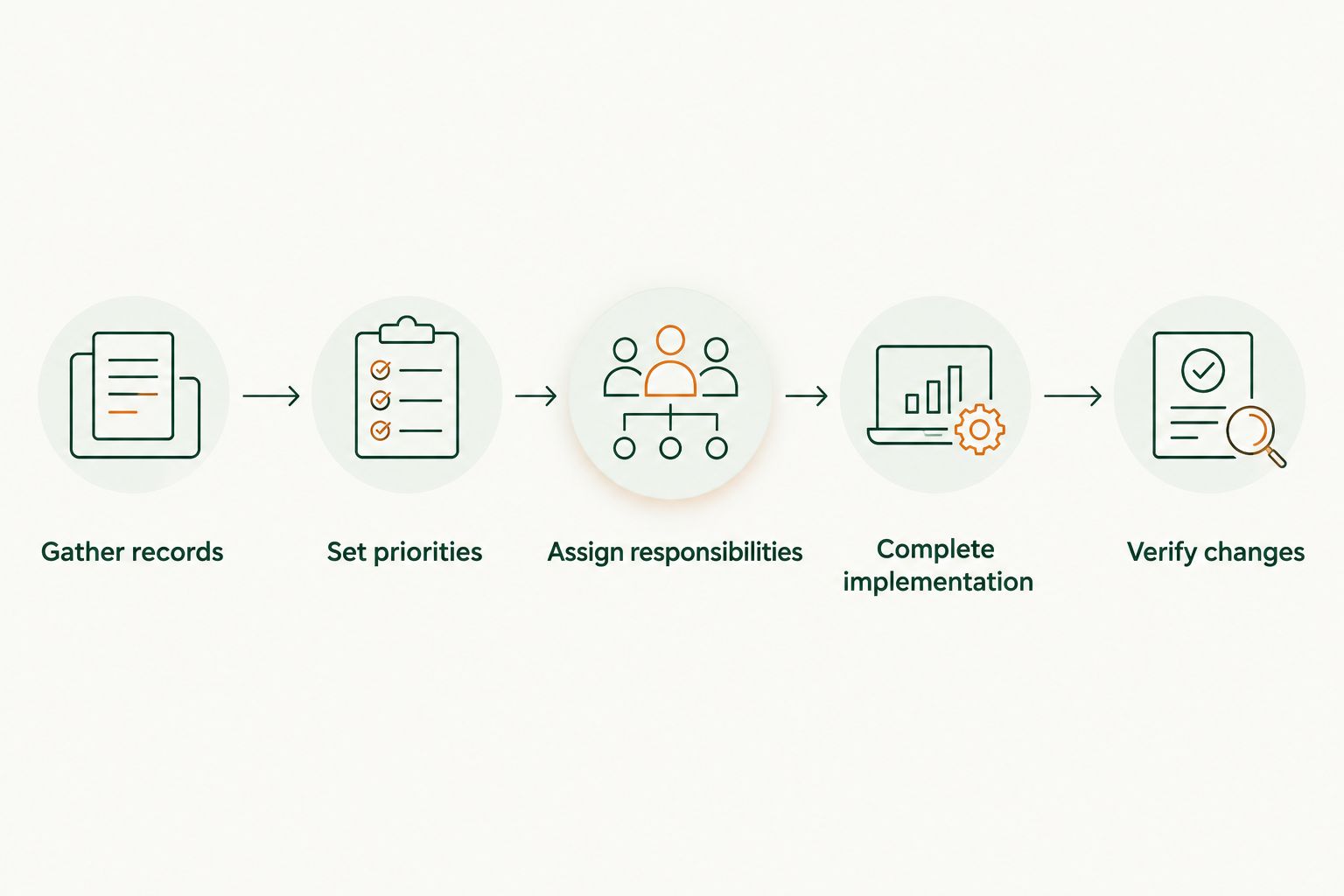
- Gather records. Collect account statements, beneficiary confirmations, deeds, business agreements, and existing estate documents. Keep a list of anything still outstanding.
- Set priorities. Explain what you want the estate plan to accomplish, including support for family members, charitable wishes, and business continuity where relevant.
- Assign responsibilities. Identify who handles financial analysis, legal drafting, tax advice, and each implementation task. Do not assume that an advisory relationship includes every professional service.
- Complete implementation. Follow the attorney’s guidance on execution and asset ownership, then submit the required account instructions to the appropriate institutions.
- Verify changes. Obtain confirmations and compare the resulting records with the intended plan. Keep unresolved items visible until someone closes them.
The sequence matters. Submitting forms before the legal instructions are settled creates avoidable rework; stopping after the signing appointment leaves implementation unfinished.
When scheduling your 2026 work, attach the next action to each open issue. Instead of recording that a beneficiary needs changing, record who submits the form and who checks the confirmation.
This also makes professional meetings more useful. You can spend the discussion resolving decisions rather than reconstructing which tasks were assigned at the previous meeting.
What should you expect from an integrated advisor?
An integrated advisory relationship connects estate planning with your investments, retirement needs, and tax considerations. It does not remove the need for an estate planning attorney or turn legal drafting into investment management.
VIMNewEngland is a fit for individuals, families, and business owners seeking estate planning within an integrated financial planning and investment management relationship. Its stated model brings savings, retirement, taxes, and estate planning into one advisory relationship. The boundary remains important: financial coordination is not a substitute for legal advice.
When you speak with VIMNewEngland, ask how estate planning recommendations become assigned actions. Also ask what you need to obtain from your attorney and what evidence will show that implementation is complete.
For your 2026 planning discussion, focus on those responsibilities rather than expecting a universal turnaround promise. A clear division of work gives you something concrete to manage.
Discuss your estate planning priorities
Connect your estate planning questions with your wider financial planning and investment management needs.
Is estate planning finished when the documents are signed?
No. Signing completes the execution of the documents, but it does not automatically update beneficiaries, transfer ownership, or satisfy every institution’s requirements.
Ask your attorney which assets require action, then confirm those changes through the responsible institutions. A signed document and a completed account update are separate evidence of progress.
Can a financial advisor replace an estate planning attorney?
No. A financial advisor helps connect estate goals to your financial position, while an estate planning attorney provides legal advice and prepares the legal documents.
Ask each professional to identify the decisions within their responsibility. Coordination works when their instructions agree, not when one role is assumed to cover the other.
Can you start before every family decision is settled?
Yes. You can gather records and review your financial position while family decisions remain open, but final legal instructions require those choices to be resolved.
Tell your advisor and attorney which issues remain undecided. That lets them separate work that can proceed from work that depends on your answer.
FAQ
How long does estate planning take with a financial advisor?
Estate planning has no universal duration; the timeline depends on decisions, legal drafting, execution, and account implementation. Ask for milestones with named owners rather than treating the first meeting or signing appointment as completion.
What should I bring to an estate planning meeting?
Bring current account statements, beneficiary records, existing estate documents, and information about property or business ownership. Include amendments and executed documents so the review reflects the arrangements actually in place.
Does my financial advisor write my will or trust?
An estate planning attorney prepares your will or trust and provides legal advice. A financial advisor helps organize your financial picture and connect the legal plan with investment and retirement decisions.
Do beneficiary changes happen automatically after I sign a will?
No, signing a will does not automatically change an account’s beneficiary designation. Submit the appropriate instructions to the institution and obtain confirmation that it accepted the change.
Does every asset need to go into a trust?
No, trust funding depends on the legal plan and the type of asset. Ask your attorney which assets require ownership changes; do not apply the same transfer instruction to every account.
How do I know whether my estate plan is complete?
Check that the documents are properly executed, required account changes are confirmed, and unresolved tasks have been addressed. Keep a record of what was completed and which professional confirmed it.
Can VIMNewEngland include estate planning in financial planning?
VIMNewEngland includes estate planning within its integrated financial planning and investment management relationship. Ask how financial recommendations are coordinated with your estate planning attorney and translated into implementation tasks.
One last thing
The most useful closing question is not whether your estate documents are finished. It is: Which asset still does not match the instructions we agreed on?
Ask that question during your 2026 review, and keep the answer on a written action list. A remaining beneficiary form or ownership change deserves the same attention as the documents that made it necessary.