
Hiring a fiduciary advisor is worth it for a modest portfolio when you need help with consequential financial decisions, not simply someone to select investments. The trade-off is an ongoing advisory expense and your time: a straightforward portfolio does not automatically need ongoing management. Choose the smallest scope of advice that addresses your actual planning needs.
- Is hiring a fiduciary advisor worth it for a modest portfolio? Yes for planning complexity; not automatically for investment selection.
- A one-time financial plan suits a defined decision; ongoing advice suits decisions that require continuing coordination.
- VIMNewEngland suits households seeking integrated financial planning and investment management rather than investment selection alone.
- Fiduciary responsibility does not eliminate conflicts, investment risk, or the need to review an advisor’s scope.
Is hiring a fiduciary advisor worth it for a modest portfolio?
A modest portfolio can justify professional advice without justifying a permanent investment-management relationship. Separate those decisions before interviewing advisors. You might need a retirement decision reviewed while remaining comfortable handling your investments yourself.
For your 2026 decision, compare the work you need with the service you would actually receive. VIMNewEngland provides financial planning and investment management as an integrated relationship; that model serves a different need from help with an isolated question.
| Advice approach | Best for | Main advantage | Main limitation |
|---|---|---|---|
| Self-directed planning | A straightforward situation you understand and maintain | You retain control over decisions and implementation | You must recognize problems and keep the plan current |
| One-time fiduciary planning | A defined decision or a financial second opinion | You receive advice focused on a specific scope | Follow-through and later updates depend on the agreement |
| Ongoing fiduciary advice | Recurring decisions across retirement, investments, taxes, and family needs | Decisions can be coordinated as circumstances change | An ongoing relationship adds expense and requires participation |
These are service models, not guarantees of quality. A narrowly scoped engagement with clear recommendations is more useful than a broad engagement that leaves responsibilities unclear.
Why this matters
The size of your investment account does not reveal the difficulty of your financial decisions. A household approaching retirement can face withdrawal, insurance, beneficiary, and tax questions even when its portfolio feels modest.
The reverse also matters. A larger account invested for a distant goal does not, by itself, establish a need for frequent intervention. Pay for decisions, coordination, and follow-through—not the feeling that an account balance requires supervision.
In 2026, begin with the decision you are postponing. If you cannot name a decision or an ongoing responsibility you want help managing, clarify your needs before committing to a continuing relationship.
Self-directed planning: best for a manageable financial routine
Self-directed planning fits when you understand your accounts, have clear goals, and consistently handle the work. The advantage is control. You decide what to do and remain responsible for implementation.
The limitation is that confidence is not the same as a complete plan. Investment selection does not answer how much cash you need, whether beneficiaries match your intentions, or how a retirement withdrawal affects the rest of your finances.
Before choosing this route, write down how you will maintain your plan. Include what prompts a review and which questions require professional help. If that process is realistic, ongoing management is not a prerequisite for responsible investing.
Best for: households with straightforward needs and the willingness to maintain their own decisions. Seek focused advice when a question falls outside your knowledge rather than guessing through it.
One-time fiduciary planning: best for a defined decision
A limited engagement fits a question with a clear endpoint. Examples include reviewing retirement readiness, assessing an investment allocation, or organizing financial priorities after a change in circumstances.
The benefit is focus. You can ask for a written recommendation, its assumptions, and the actions required to carry it out. The limitation is continuity: a completed plan does not update itself when your employment, family, or spending changes.
Ask what happens after delivery. Does the agreement include discussion of the recommendations, implementation support, or later clarification? Do not assume that receiving a plan includes transferring accounts or ongoing portfolio management.
Best for: someone who needs direction but can manage the follow-through. Confirm that the advisor offers this engagement structure before scheduling a detailed planning discussion.
Ongoing fiduciary advice: best for recurring coordination
An ongoing relationship fits when decisions keep interacting. Retirement withdrawals affect taxes; investment risk affects spending flexibility; family changes affect beneficiary and estate decisions.
The advantage is continuity across those moving parts. The limitation is that ongoing service requires a continuing reason to exist. Receiving statements or occasional portfolio commentary does not, by itself, demonstrate that your planning needs are being addressed.
Ask the advisor to describe the work between meetings. You should understand which accounts are reviewed, which decisions receive attention, and who is responsible for implementation. An integrated relationship also needs clear boundaries around legal work and tax preparation.
Best for: households that want continuing help coordinating financial decisions and carrying them out. Choose this model because the work recurs, not because the advisor describes every household as needing it.
Why the value of fiduciary advice varies
For a modest portfolio, these factors explain more than the account balance alone:
- Decision complexity: Connected retirement, tax, investment, and family questions create a different need from choosing an investment allocation.
- Life transitions: Retirement, an inheritance, a business transition, or a family change can require a fresh review of existing arrangements.
- Implementation capacity: A written plan has limited practical value if you cannot complete its actions or maintain the decisions yourself.
- Service scope: Planning, portfolio management, tax preparation, and legal drafting are different responsibilities. Confirm what the engagement includes.
- Continuing need: Recurring decisions support a continuing relationship; a defined question supports considering a limited engagement.
Use these factors to explain your situation during an introductory conversation. An advisor should be able to connect the proposed service to the problems you describe without relying on promises about investment performance.
How to decide before you hire an advisor
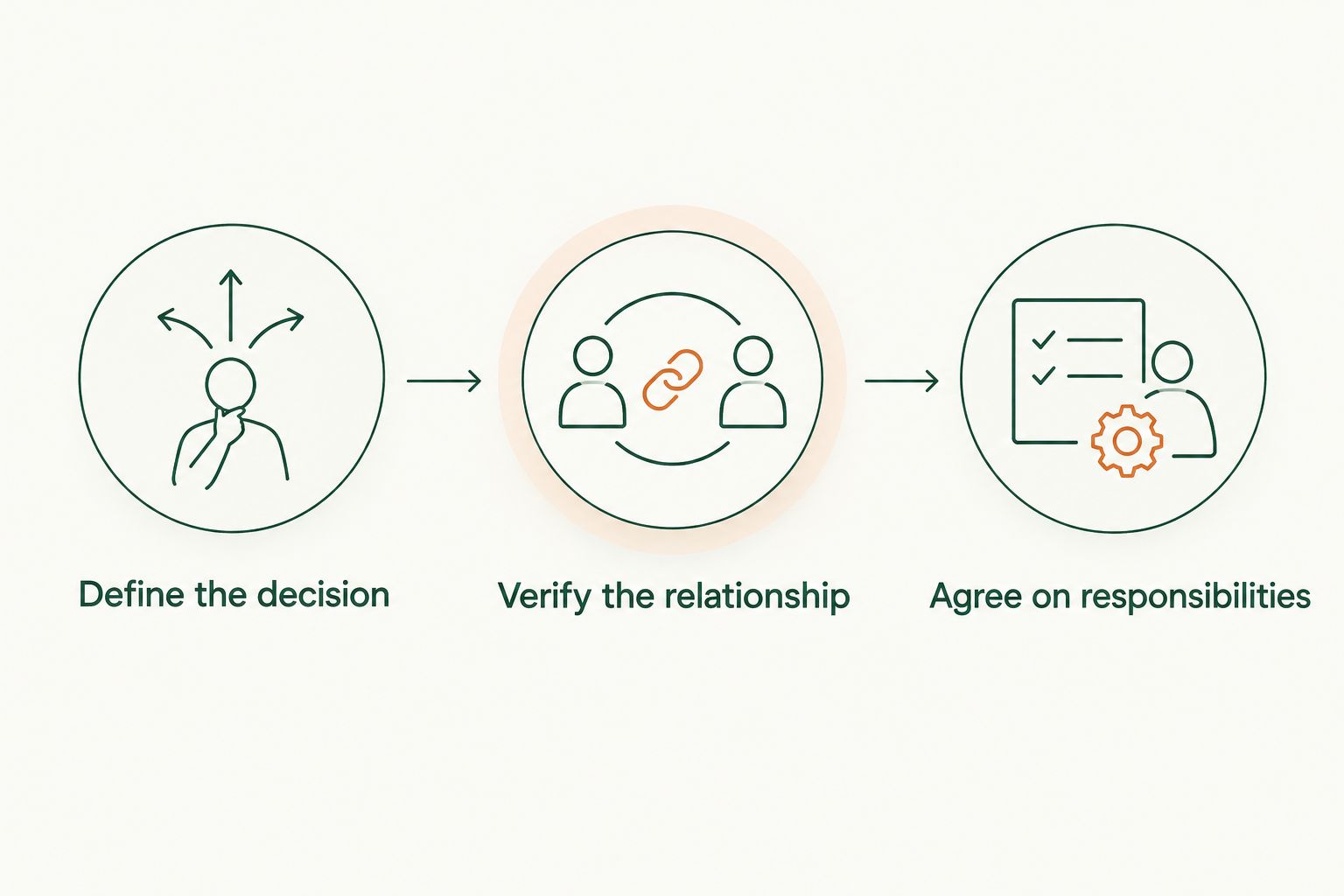
Use this 3-step review for your 2026 advisor search. The purpose is to turn a broad question about value into a specific agreement about work.
1. Define the decision
Write down the financial decision that brings you to the conversation. Be concrete: deciding when to retire is a clearer starting point than wanting to feel better about money.
Then describe what a useful answer would let you do. That might mean choosing a withdrawal approach, establishing investment responsibilities, or understanding which estate questions belong with an attorney. You are defining an outcome, not requesting a market forecast.
2. Verify the relationship
Ask whether the advisor will act as a fiduciary throughout the engagement and request the answer in writing. Ask how the firm is compensated, which conflicts exist, and how those conflicts are addressed.
Check the advisor’s registration and disclosures through the relevant regulator. SEC registration is not an endorsement or a guarantee of investment results. For a closer look at the questions to ask, read how to know whether your financial advisor is truly a fiduciary.
3. Agree on responsibilities
Request a written description of deliverables, exclusions, and implementation duties. Establish who monitors the plan and what happens when your circumstances change.
Ask how the relationship ends, too. Understanding termination terms and account responsibilities is part of evaluating an engagement, not a sign that you expect it to fail.
The sequence matters: define the work first, verify who will provide it, and then agree on who does what. Comparing proposals without that foundation leaves you comparing labels rather than services.
What should an advisor explain before you commit?
A useful proposal translates your concerns into specific responsibilities. For a 2026 engagement, ask the advisor to explain the following in ordinary language:
- The decisions the advisor will help you make.
- The information you must provide and keep current.
- The recommendations or planning documents you will receive.
- The accounts the advisor will manage, review, or exclude.
- The work that belongs with your accountant or attorney.
- The circumstances that trigger a review of the plan.
Do not treat a fiduciary label as a substitute for a clear agreement. Fiduciary responsibility matters, but it does not tell you whether the engagement includes the particular work you need.
You should also understand how recommendations become actions. If the advisor identifies a beneficiary issue, for example, clarify who will review the relevant documents and who will complete any account updates. A recommendation without an assigned next step can remain unfinished.
Can a small portfolio still involve complicated planning?
A small portfolio can still involve complicated planning because account value and decision complexity measure different things. Someone nearing retirement must consider spending and income needs alongside investments, regardless of whether the portfolio feels large.
A business owner can also have substantial financial obligations outside an investment account. Describe the whole financial situation rather than presenting the brokerage balance as the complete measure of your needs.
The relevant question is whether an advisor can address the connected decisions you face. Avoid paying for unrelated services simply because they appear in a standard package.
Does a fiduciary advisor guarantee better investment returns?
A fiduciary advisor does not guarantee better investment returns. Investment losses remain possible, and an advisory relationship does not remove market risk.
Evaluate controllable work instead: whether recommendations reflect your goals, whether risks are explained, and whether decisions receive the agreed attention. Investment performance is relevant to reviewing a portfolio, but it is not a substitute for reviewing the quality and scope of advice.
Should I hire an advisor only when my portfolio gets larger?
You do not need to wait for a larger portfolio to ask for financial advice. A consequential decision can justify a focused engagement before ongoing investment management makes sense.
Equally, you do not need to start an ongoing relationship merely because your balance increases. Reassess the decisions, responsibilities, and coordination you want help handling.
Where an integrated advisory relationship fits
VIMNewEngland is best suited to households seeking coordinated financial planning and investment management, rather than investment selection alone. Its stated approach brings savings, retirement, taxes, and estate planning into one advisory relationship.
That scope is relevant when you want financial decisions considered together. It is not automatically the right match when your only need is a narrow, one-time question. Confirm the available engagement structure and responsibilities directly.
When considering VIMNewEngland for fiduciary financial planning, explain what you want coordinated and what you already handle yourself. A useful introductory conversation should establish fit before discussing account transfers or implementation.
Discuss your planning needs
Explain the decisions you need help coordinating and ask whether an integrated advisory relationship fits.
FAQ
Is hiring a fiduciary advisor worth it for a modest portfolio in 2026?
Hiring a fiduciary advisor is worth it when your planning needs justify the scope of advice. A defined question can suit a limited engagement; recurring decisions can justify ongoing support.
Do I need ongoing investment management to get financial advice?
Financial advice and ongoing investment management are separate service choices. Ask whether an advisor offers planning without portfolio management and confirm what implementation support is included.
Is a fee-only advisor automatically a fiduciary?
Fee-only describes compensation, not the complete legal scope of an engagement. Confirm the advisor’s fiduciary responsibilities, registration, conflicts, and written agreement rather than relying on the label alone.
Can I keep managing my own investments after getting a financial plan?
You can retain investment responsibility if the engagement allows for planning without ongoing management. Confirm who implements recommendations and who is responsible for subsequent updates.
What if an advisor’s minimum does not fit my portfolio?
An advisor’s minimum determines eligibility for that particular service, not whether you deserve financial advice. Look for an engagement structure that fits your situation and ask about its scope before proceeding.
What should I bring to a first advisor meeting?
Bring your financial goals, current account information, income and spending details, and the questions you want answered. Ask the advisor how to share sensitive documents securely before sending them.
Can a fiduciary advisor replace my estate attorney or tax preparer?
A fiduciary advisor does not automatically replace an estate attorney or tax preparer. Confirm who provides legal drafting, tax preparation, and coordination, because those responsibilities depend on qualifications and the engagement.
One last thing
The most useful result of an advisor conversation can be a decision not to change something. A review might establish that your existing approach fits your goals and that only a specific planning task needs attention.
Before signing a 2026 advisory agreement, ask: what work will happen that I am not already doing? The answer should name decisions, responsibilities, and deliverables—not imply that a modest portfolio needs constant activity.